The hidden city inside your devices

Jairo Perilla avatar

by

Reading time:

2–3 minutes

We live surrounded by electronic devices. We are so accustomed to the relentless pace of technology that it feels normal to expect a thinner, lighter, and faster phone or computer every year. But what is actually happening inside them? You plug them into a socket and everything just works: the screen lights up, the camera captures images, you press a key and a letter appears. In reality, we are interacting with dozens of sensors and actuators — we just don’t realize it anymore. You’ve probably heard of electronic circuits, but what are they really?
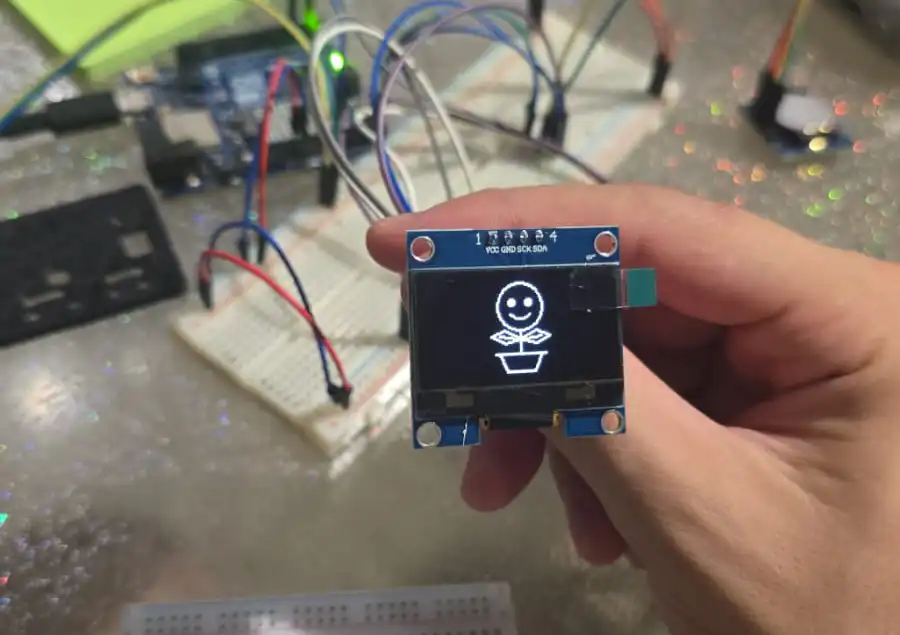


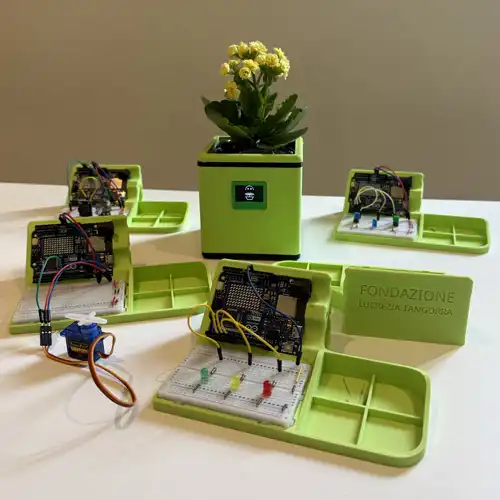
“Think of a small city connected by roads: seen from above, a circuit looks like a map, with paths that cross and divide. The destinations are the components: a LED that lights up when current flows through it, a push button acting as a drawbridge that connects two roads when pressed. Traveling along these roads are electrons — tiny, charged particles that push one another, bringing the circuit to life. But beware: if we let too many pass through a road at once, we risk overheating and burning the component, closing the path forever. This happens, for instance, when electrons find a shortcut that bypasses the component and they all rush there: that’s the famous short circuit, like a crash blocking traffic across the whole city. Inside every device, interactions like these are happening all the time. The world of electronics is vast and the components are endless, but I bet more than a few names sound familiar: display, resistor, sensor, potentiometer, transistor. And even if you don’t recognize them by name, you’ve already interacted with them anyway! To start exploring this universe, at the Lucrezia Tangorra Foundation we offer Arduino Start, an introductory course in electronics and programming.

In every lesson, we introduce new components, wire them up, and program them using Arduino — a platform born in Italy and world-renowned for its compactness and versatility, found in smart homes, 3D printers, and even small robots. Over five sessions, we will turn on lightbulbs, read sensors, and make a motor move. Participants will build their very first circuits and learn to solve problems with both their minds and hands.


0
0

Subscribe to Our Newsletter

Join our community and follow our initiatives closely.
100% value, 0% spam.

You can unsubscribe at any time.

    Do you have any questions?
    Would you like to find out more?

    Who are the beneficiaries of our projects?

    The Lucrezia Tangorra E.T.S. Foundation is actively committed to supporting and developing the world of schools and education by funding and implementing practical, tailor-made initiatives.

    We recognise the central role of education in the development of future generations; for this reason, we work constantly alongside educators, students and families to identify, as quickly as possible, emerging challenges, structural shortcomings and the educational needs of the local community. Thanks to a dynamic and responsive approach, the Foundation is able to act swiftly, transforming the needs identified into projects with a high social and educational impact, capable of providing effective solutions, adequate resources and new opportunities for growth.

    Who are our partners?

    The Lucrezia Tangorra E.T.S. Foundation works in collaboration with a diverse network of partners:

    • Public institutions: for financial and logistical support.
    • NGOs and non-profit organisations: for the implementation of joint projects.
    • Schools and universities: for the development of educational and training programmes.
    • Private companies: for donations and corporate volunteering initiatives.
    • Experts and professionals: for their specialist expertise and advice.
    Who supports us?

    Our projects are made possible thanks to a supportive network of supporters who provide financial resources, material goods, expertise and their time:

    • Private companies: through sponsorship, donations and Corporate Social Responsibility (CSR) initiatives.
    • Foundations and charitable organisations in the third sector.
    • Schools and educational establishments: actively involved in awareness-raising programmes.
    • Volunteers and members of the public: who give their time and energy.
    • Private donors: those who make charitable donations.