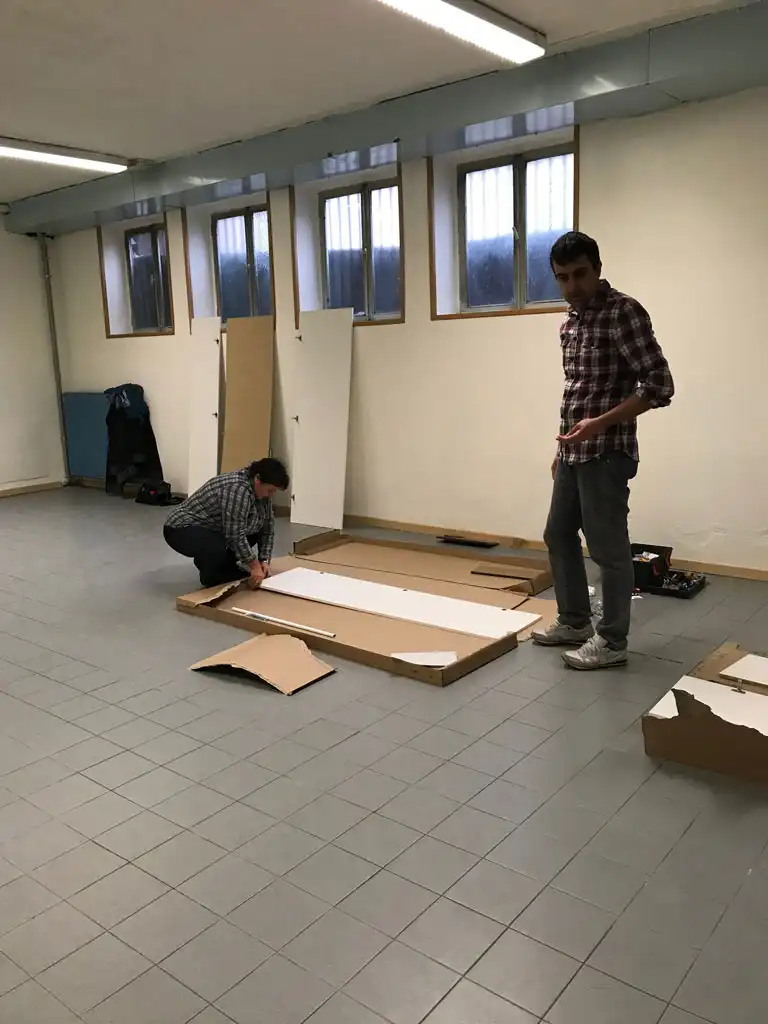
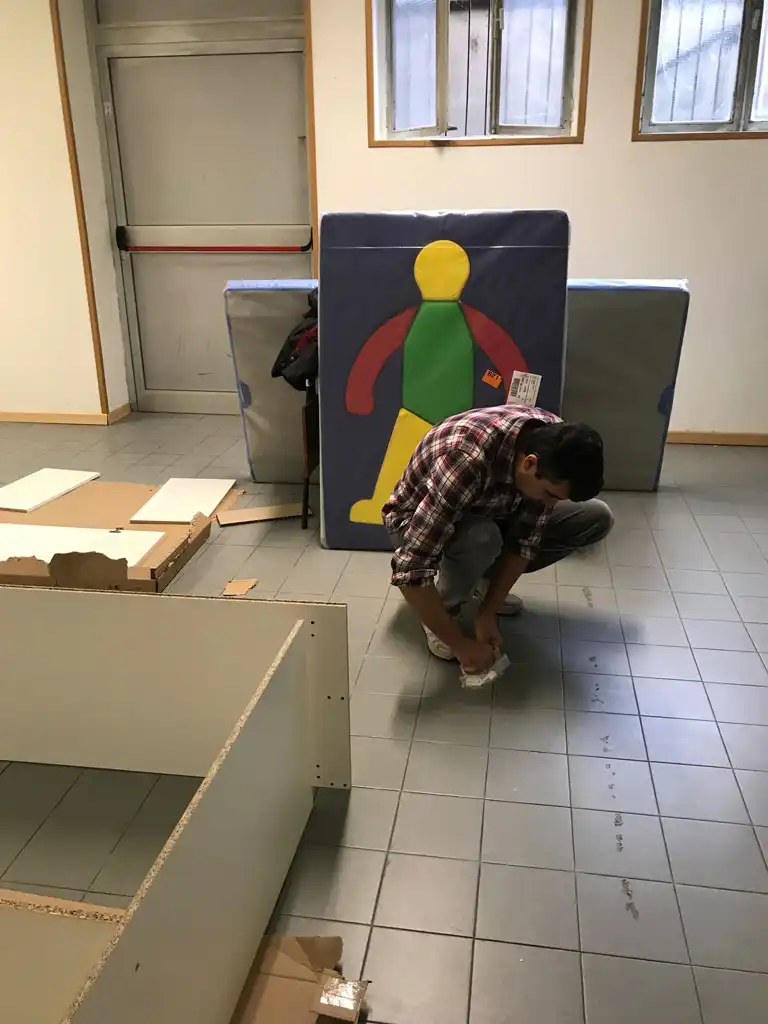
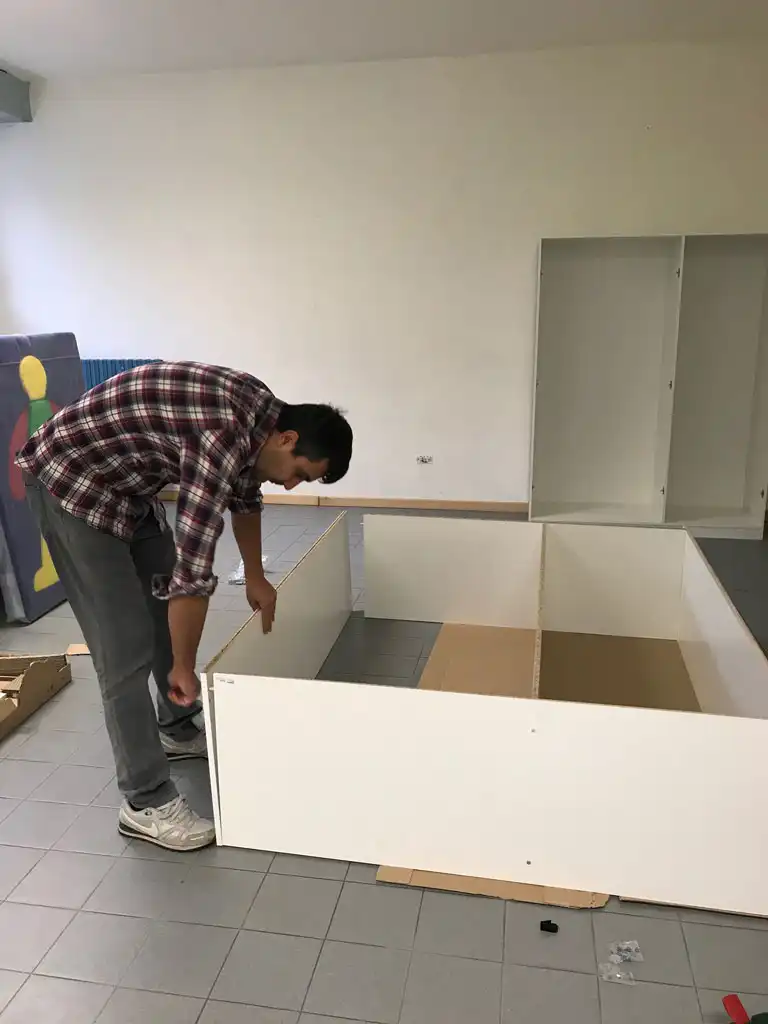
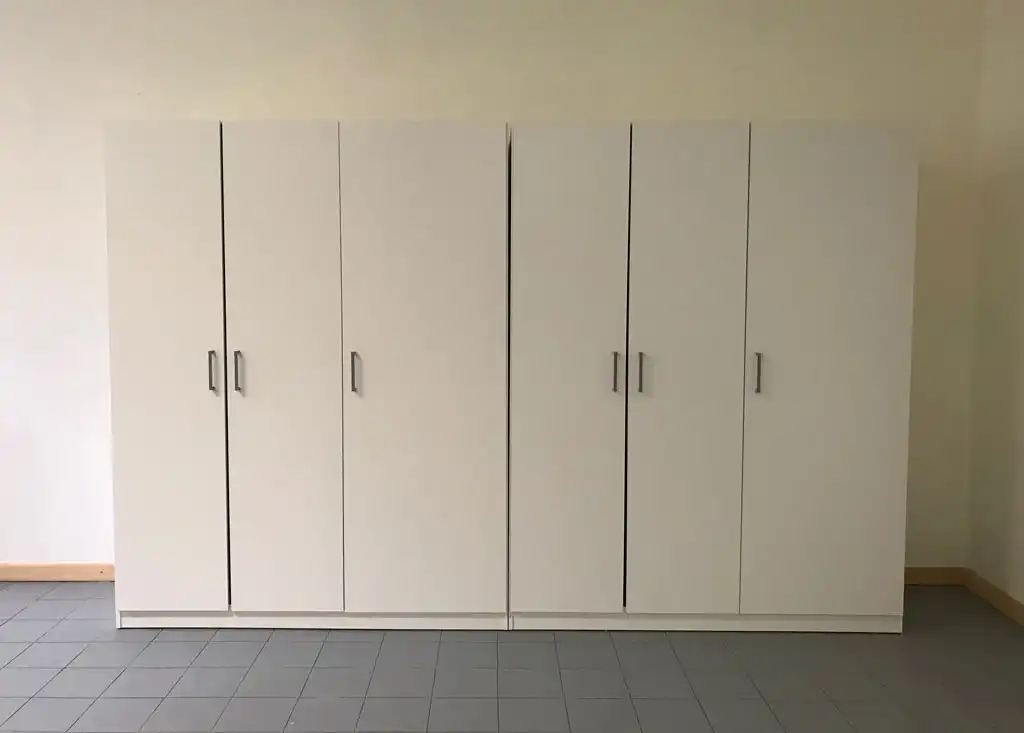
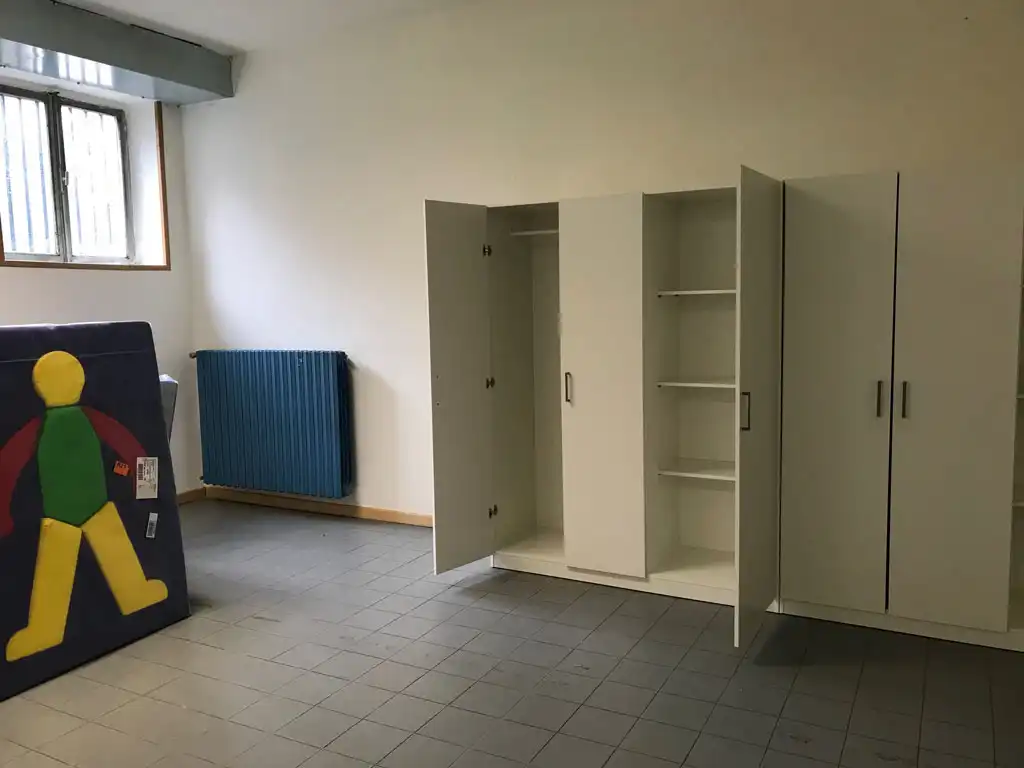
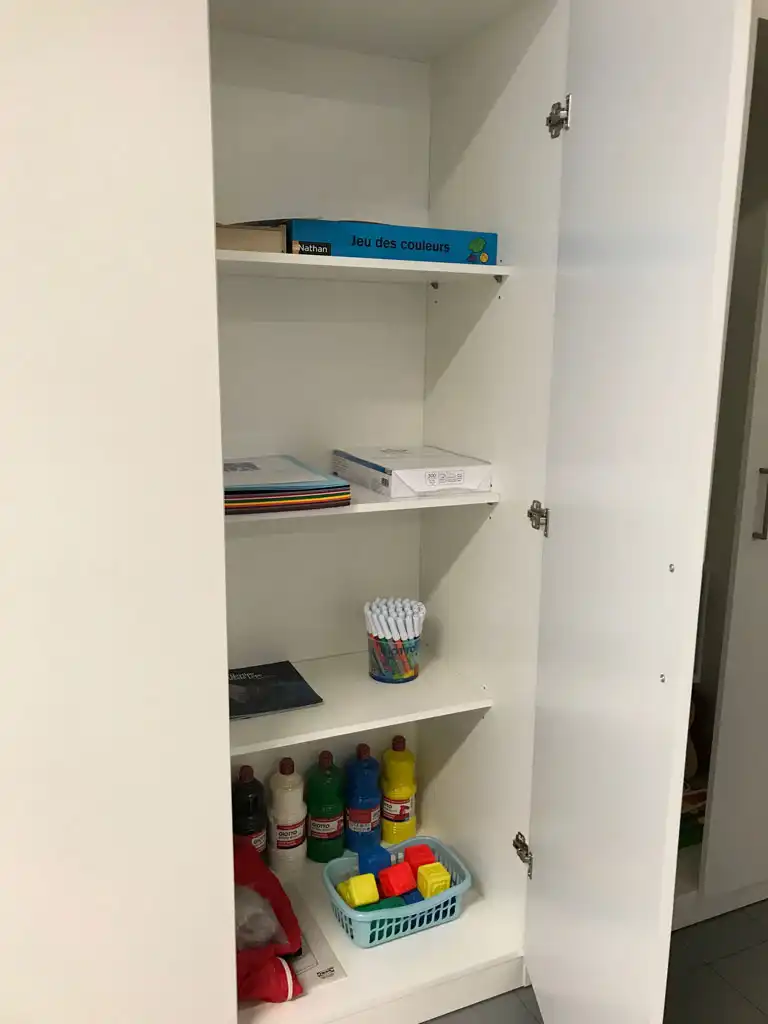
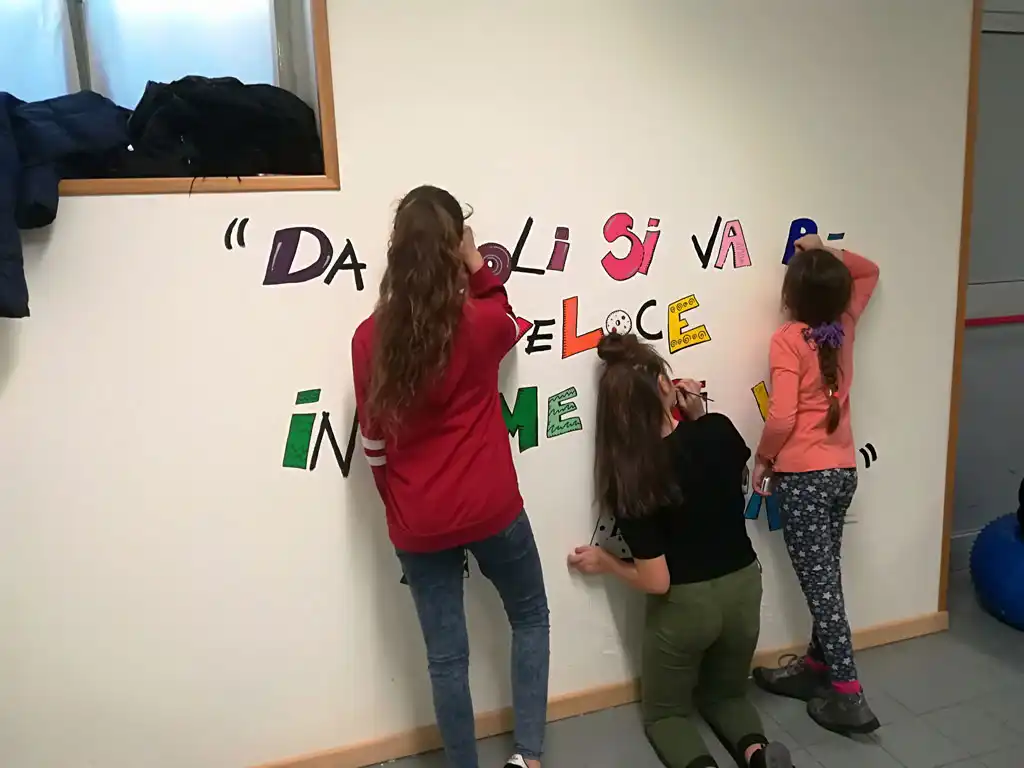
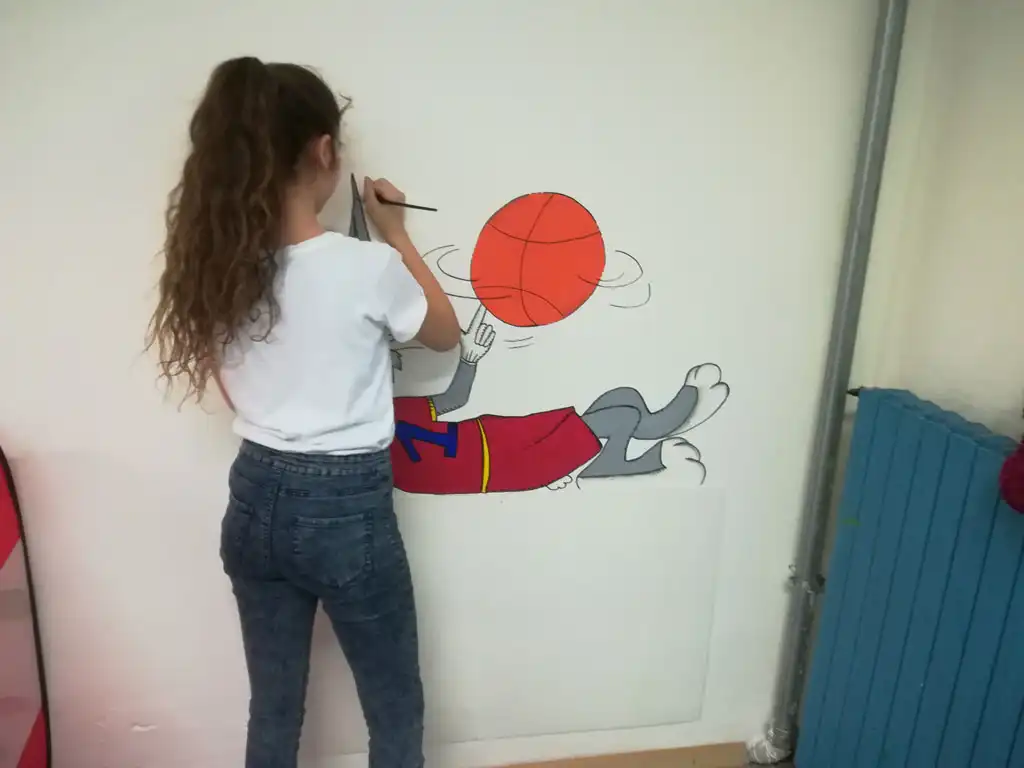
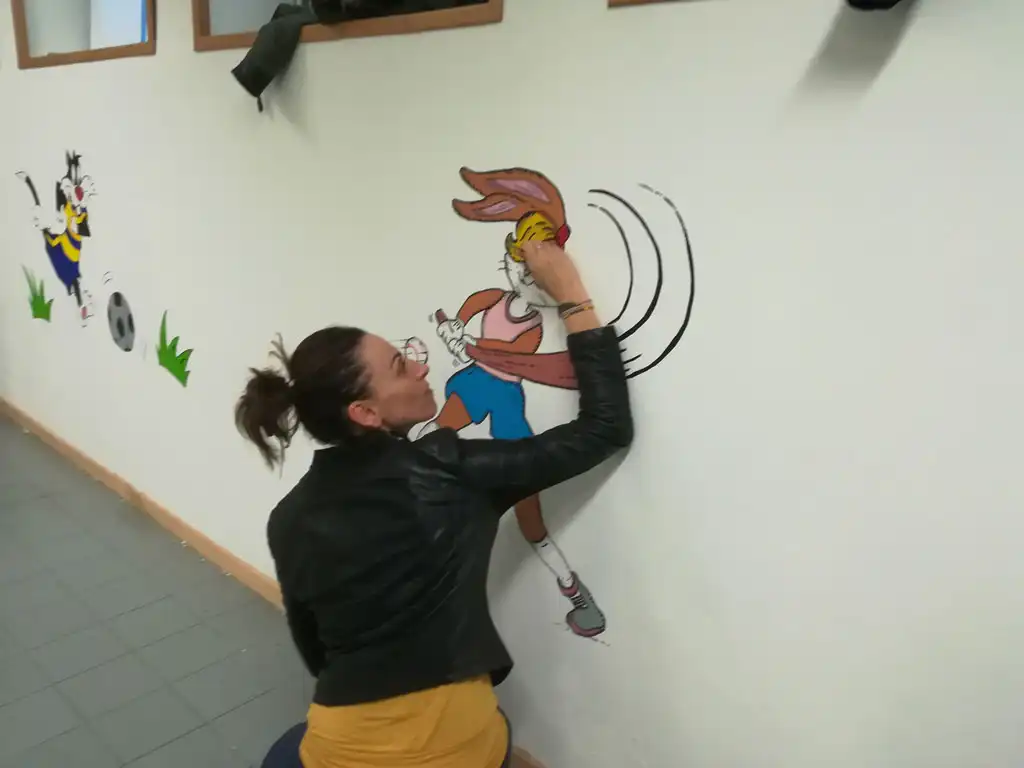
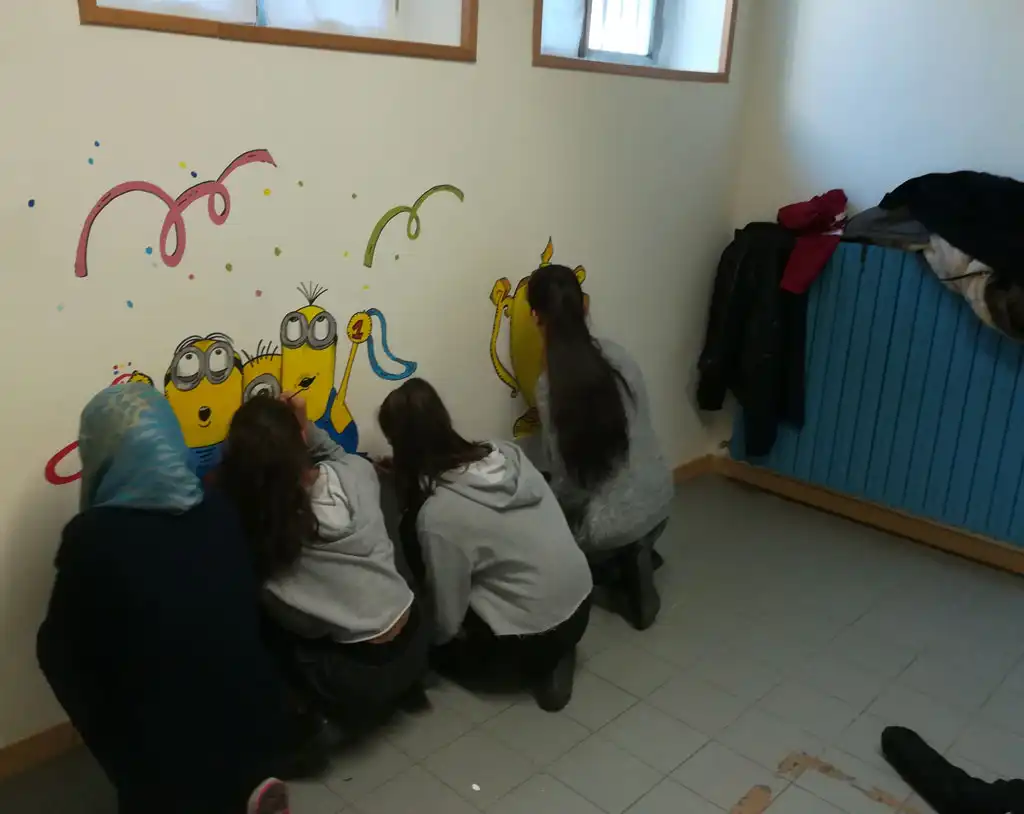
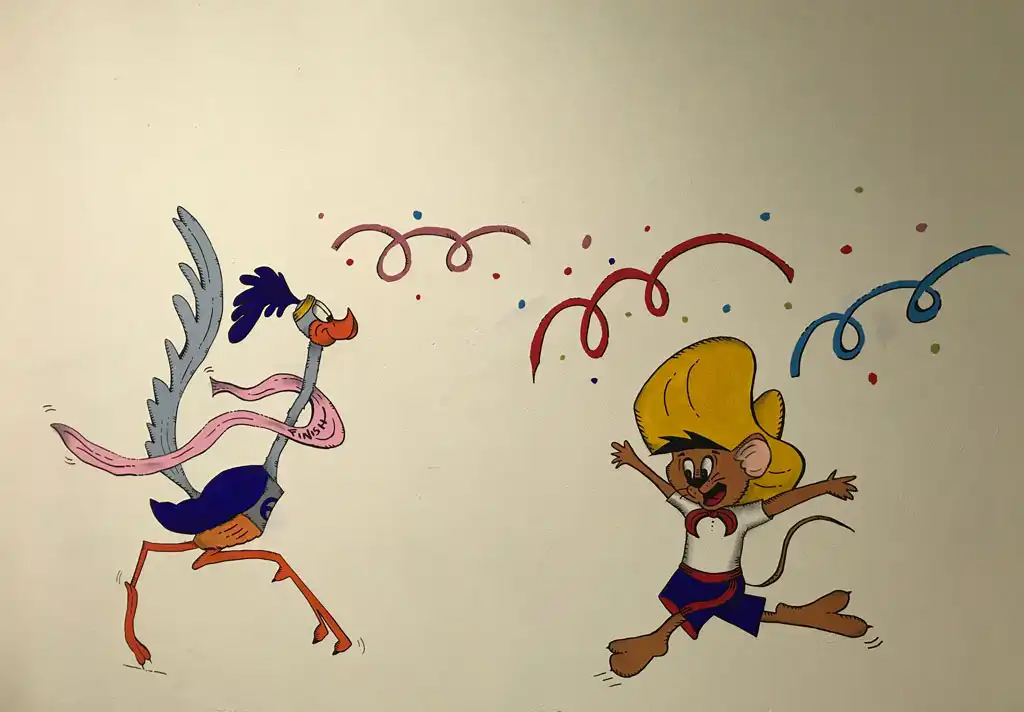
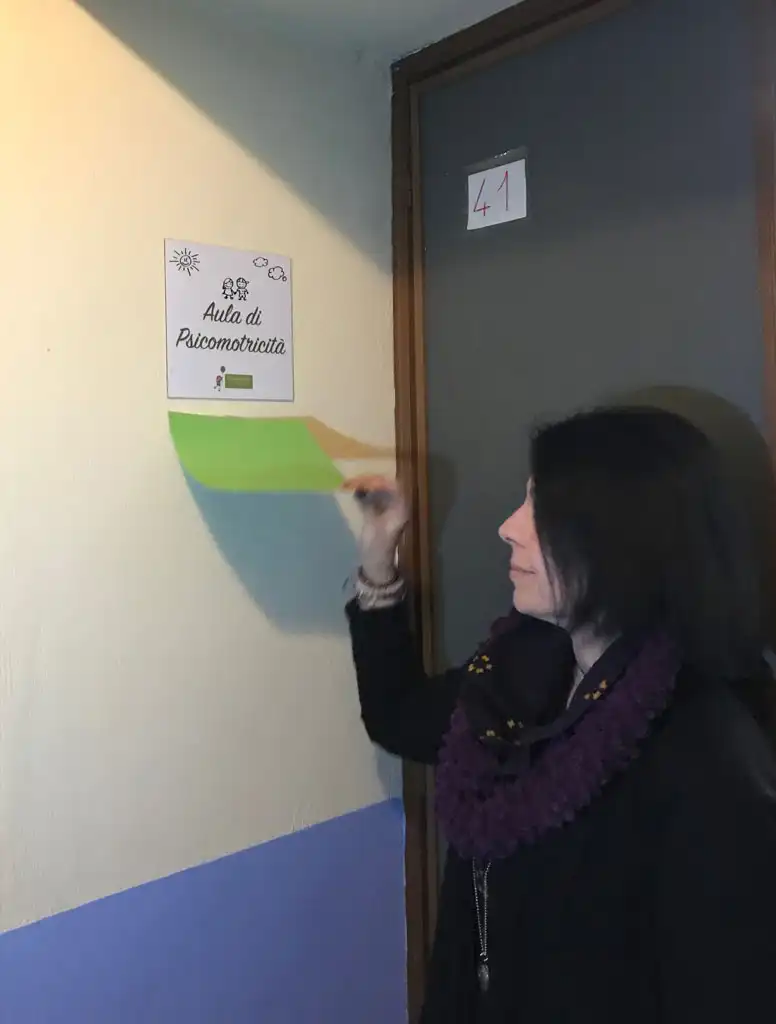
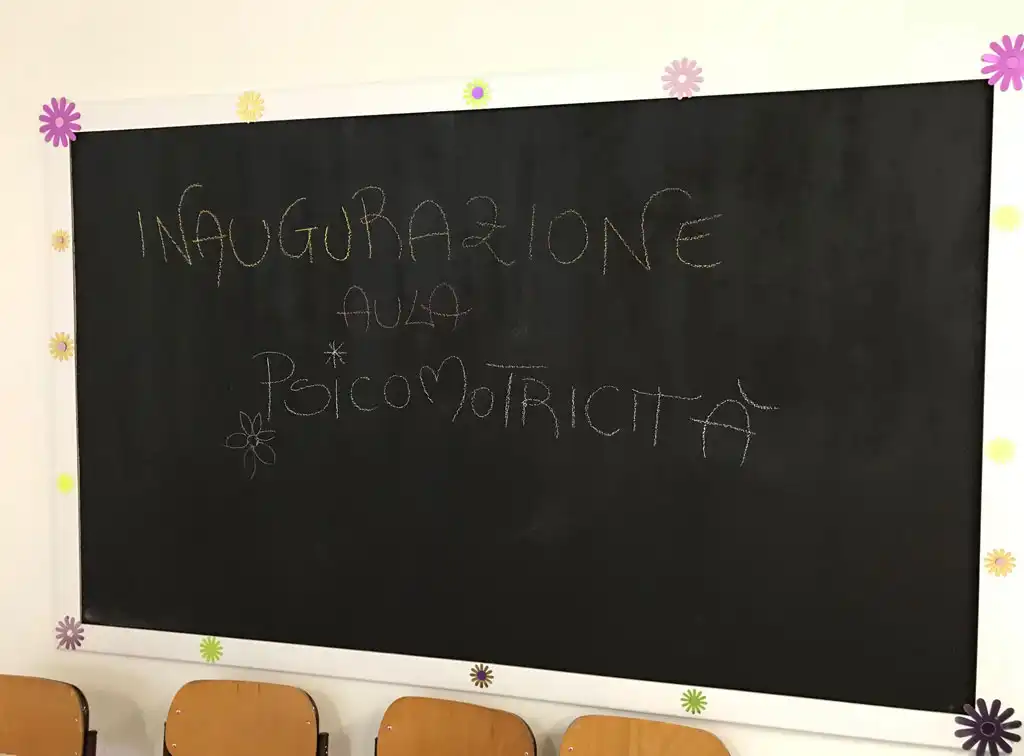
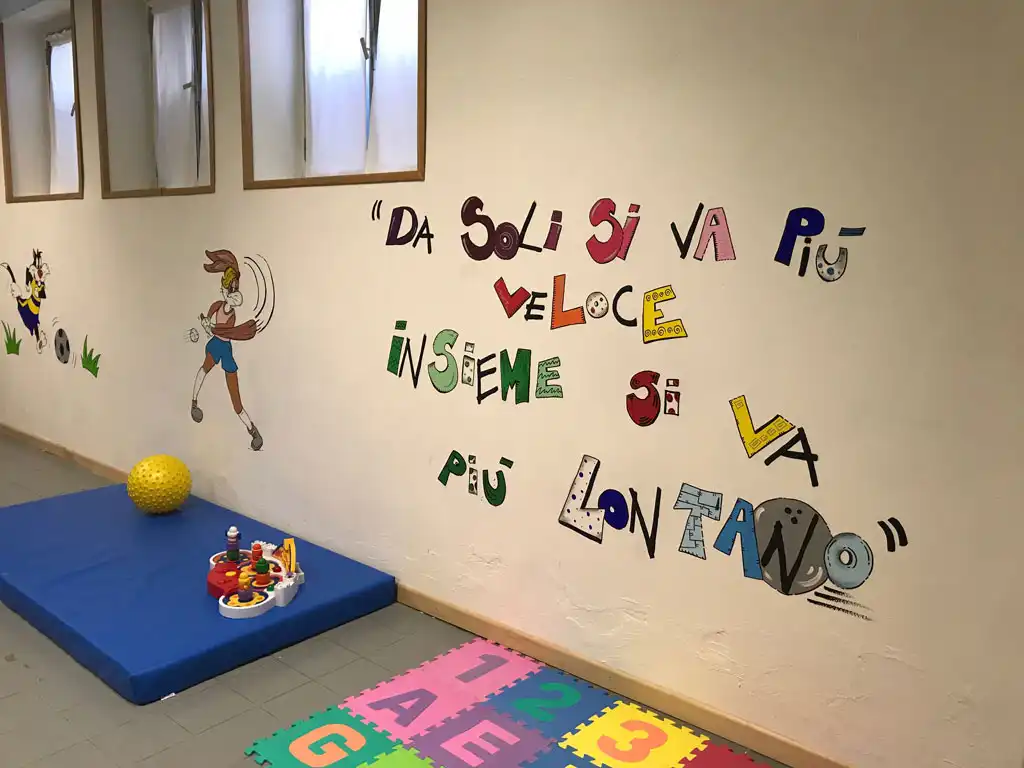
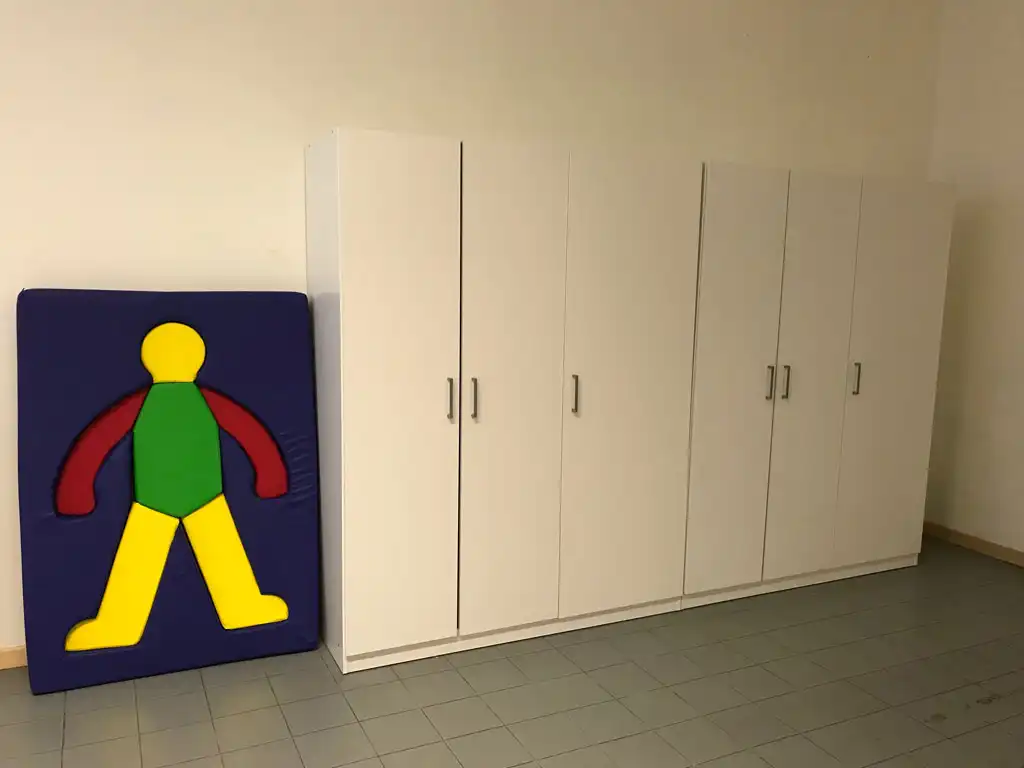
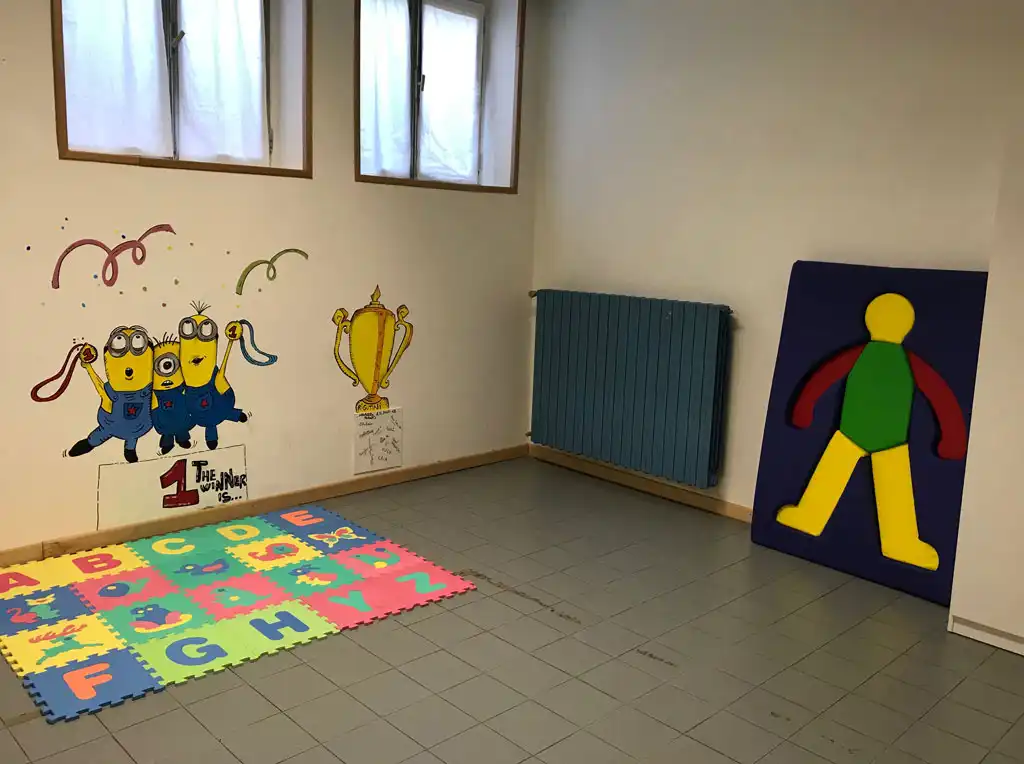
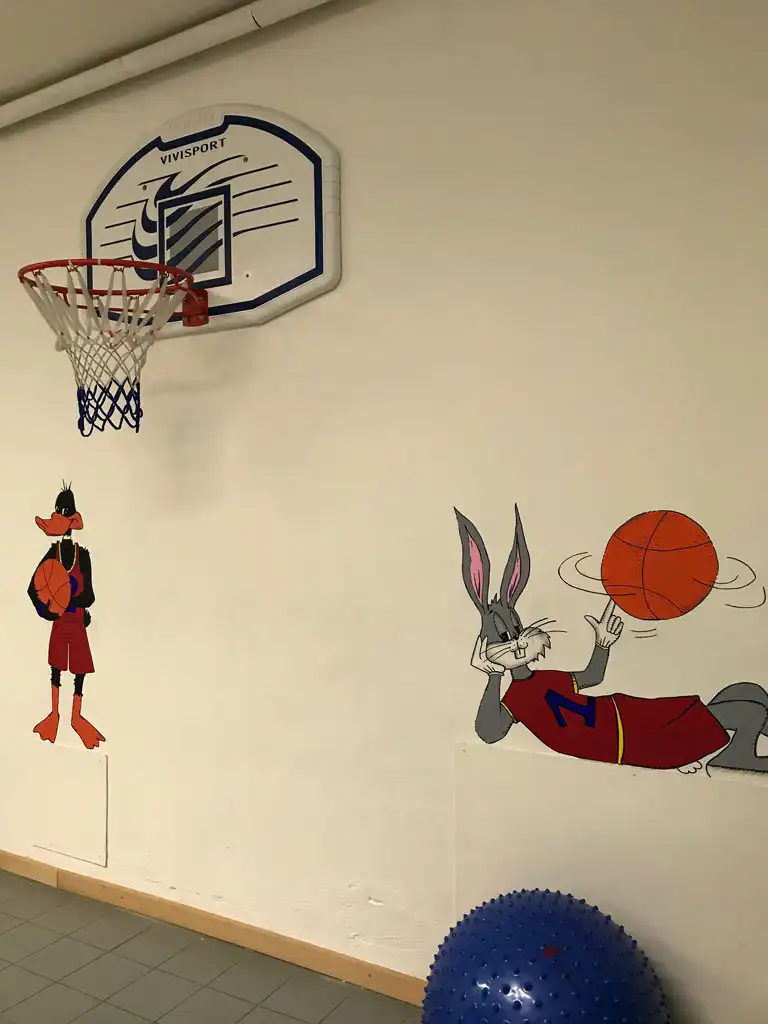
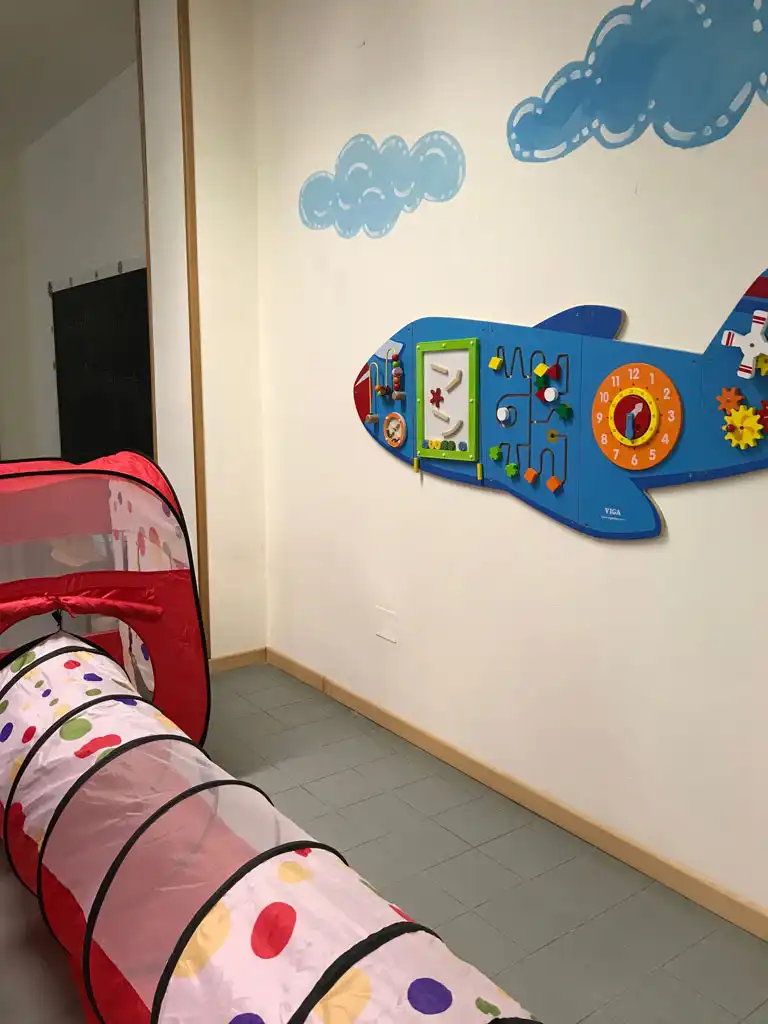
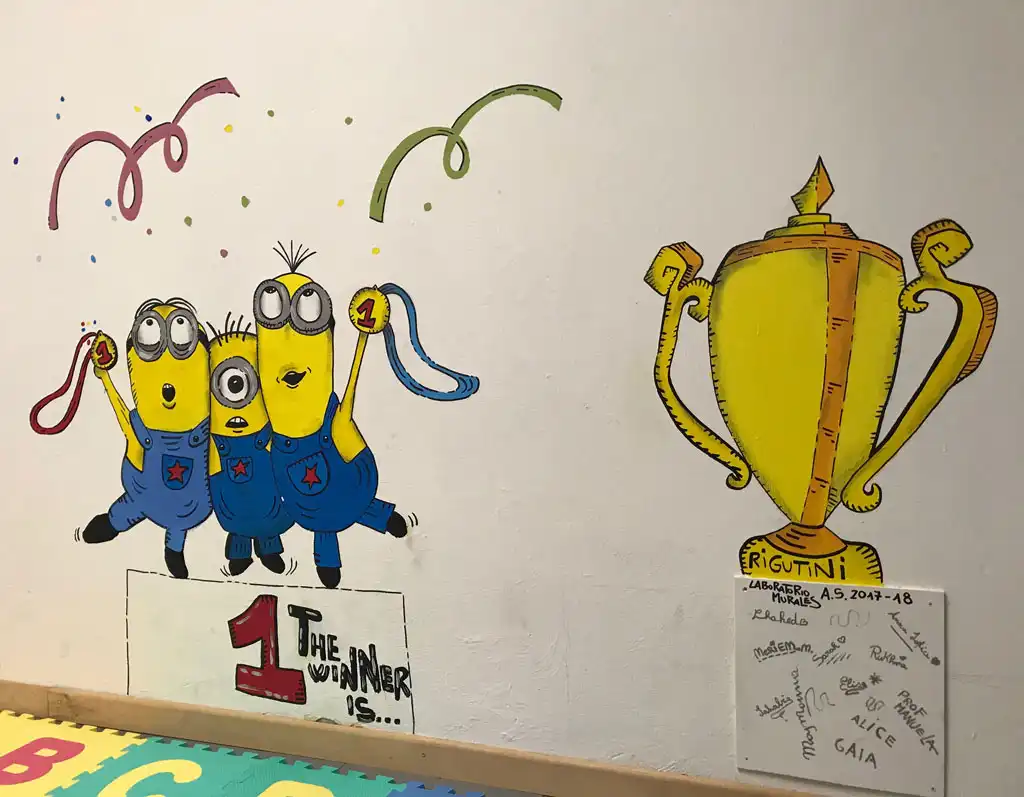
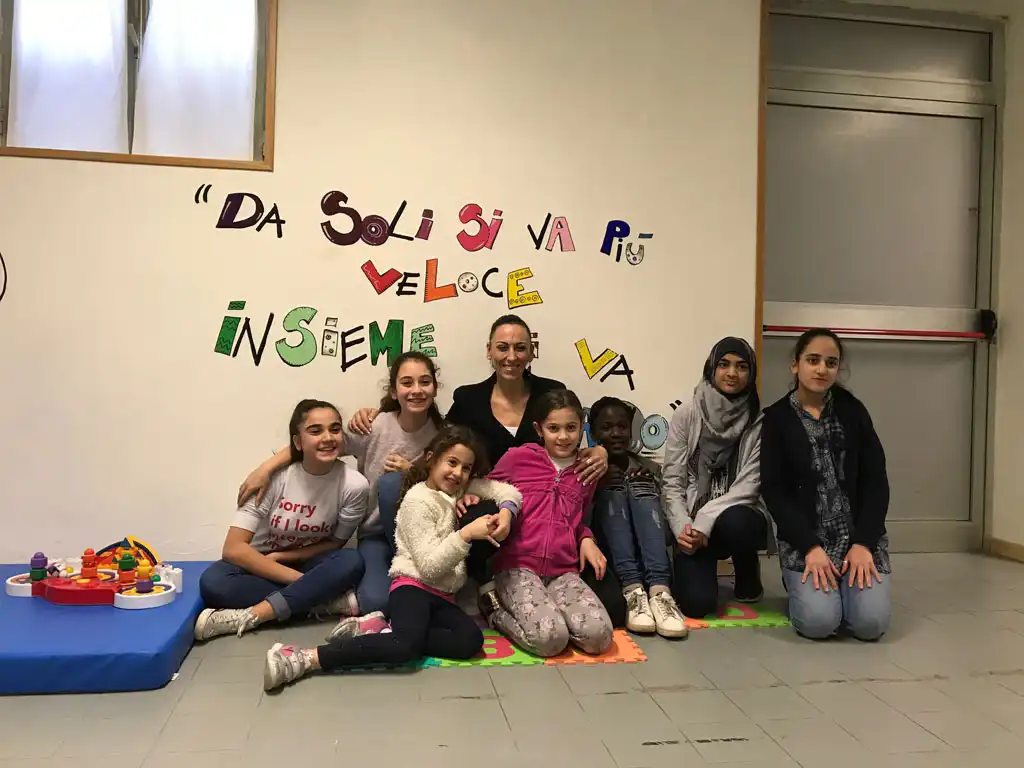
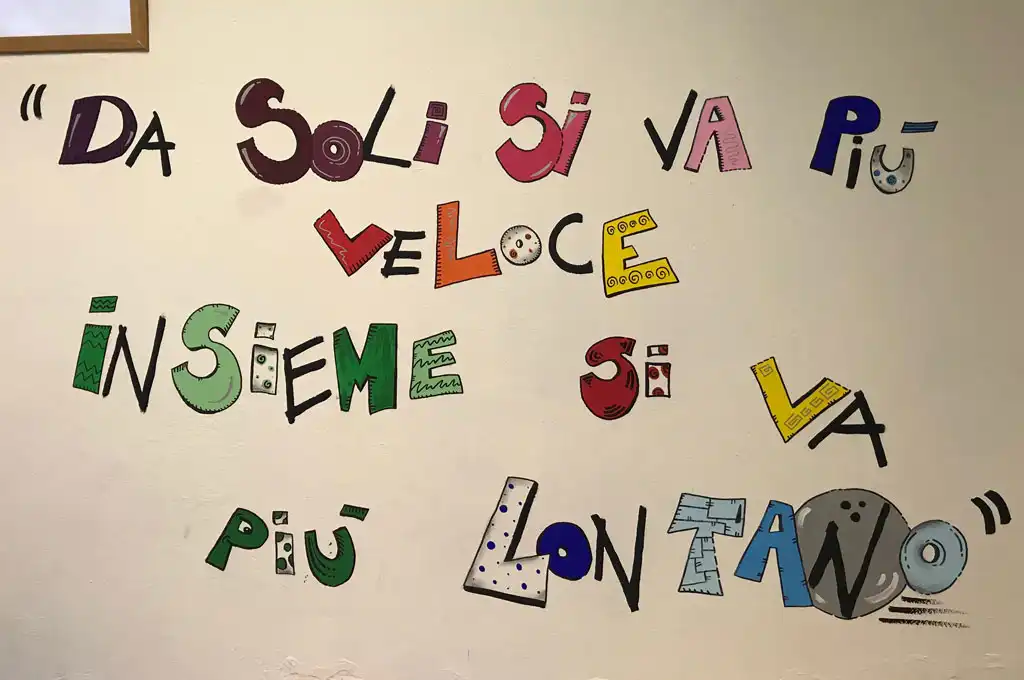
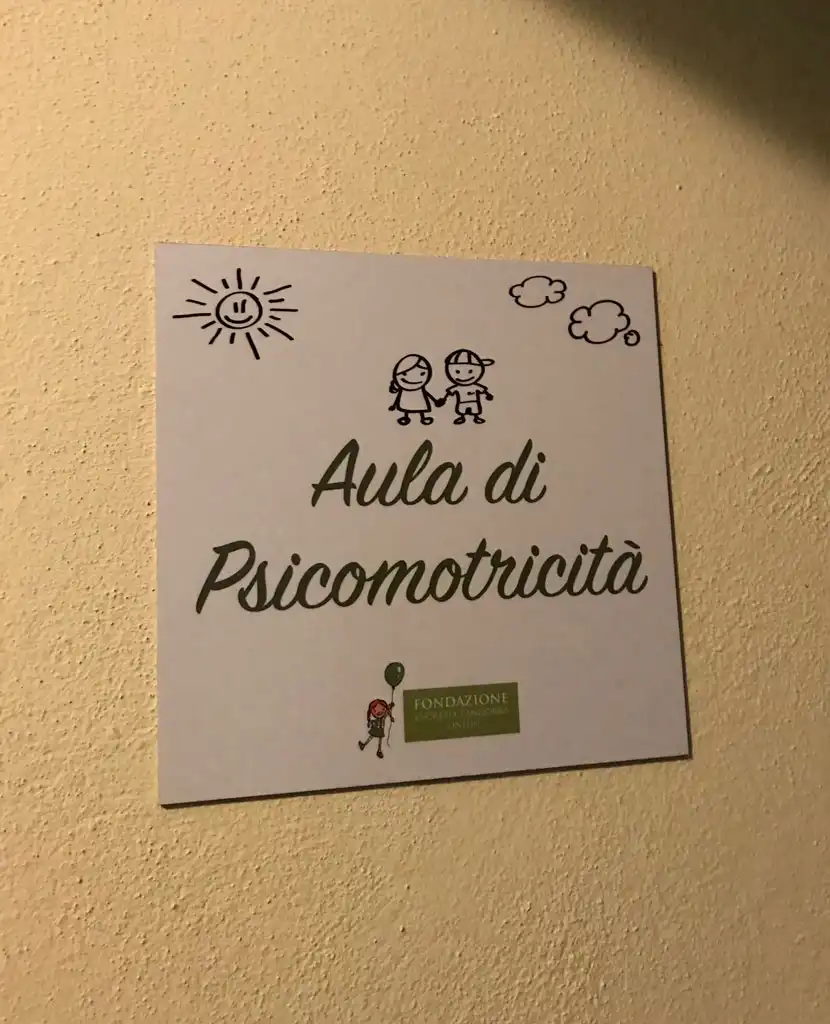
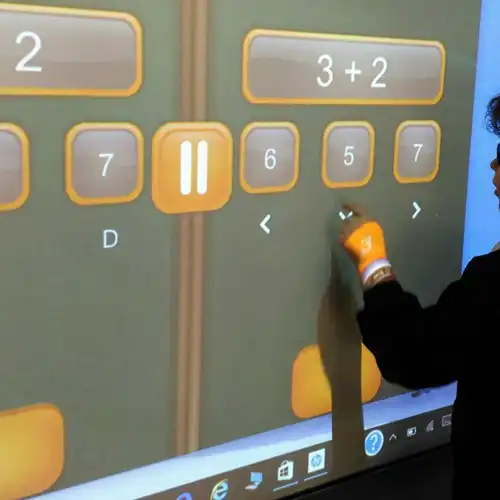
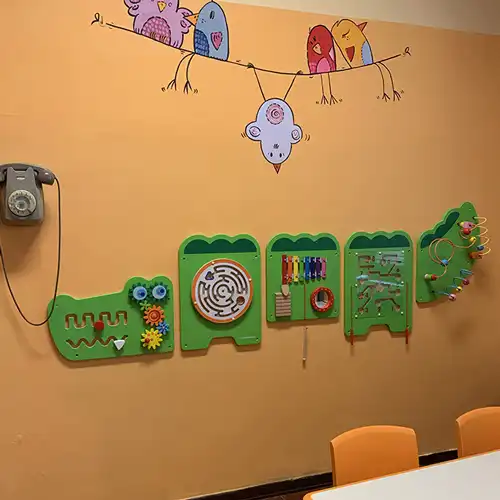
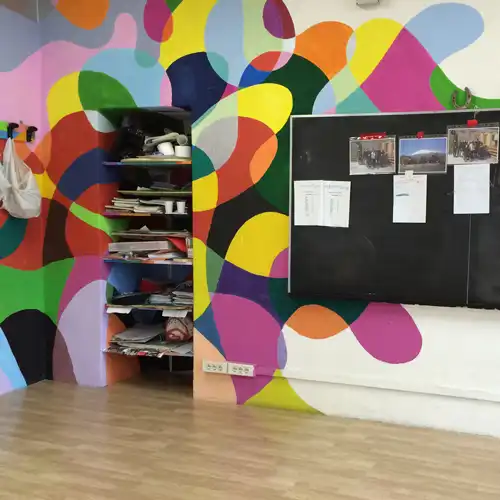
Inside the ‘Rigutini’ primary school in Novara, a classroom of about 70 m² located in the basement was identified to set up a psychomotricity lab. First of all, work was carried out to ensure the room felt warm, pleasant, and welcoming. Murals were painted on the walls by students from I.C. Bellini participating in the ‘Colori & Parole’ project, coordinated by Professor Manuela Tripepi. In addition, the space was equipped with soft, colorful materials such as mats and structured play equipment, allowing every pupil to experience moments of relaxation and/or containment, as well as learning opportunities, in order to carry out various types of activities and developmental paths.
– Soft paths
The courses cater to children’s need for movement, spatial exploration, and knowledge of their own bodies and abilities. The required equipment can be used for individual or group games, fostering children’s creativity and imagination as they challenge themselves, build self-confidence, and improve their ability to relate to others.
– Sensory Development
The structuring of a proper body schema and the development of the five senses are a fundamental stage in every child’s growth. Learning to recognize body parts and to distinguish sounds, colors, and smells also stimulates the development of verbal language.
– Fine Motor Skills
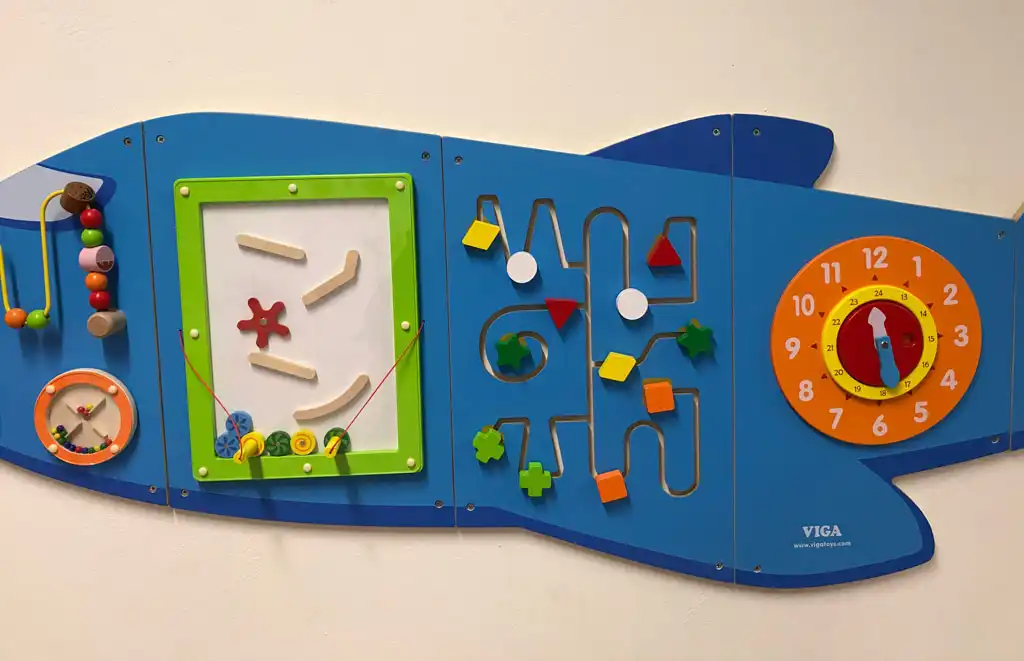
As the perception of external elements increases, the child’s attention sharpens and movements become more precise. Hand-eye and spatio-temporal coordination improve, leading towards pre-writing and writing skills. Through various types of games, children’s coordination, skill, and concentration develop: threading and lacing activities encourage the understanding of color, shape, size, and orientation, and are ideal for creating first sequences and developing fine motor skills.
– Puzzles and inset puzzles
Puzzles serve as valuable support for introducing and developing children’s understanding of spatio-temporal concepts and chronological sequence. They are also a stimulus for learning relationships between objects and improving verbal language..
The following people contributed to this project in various ways: Francesco Canetta, Roberta Paglino, Manuela Tripepi, and her students.
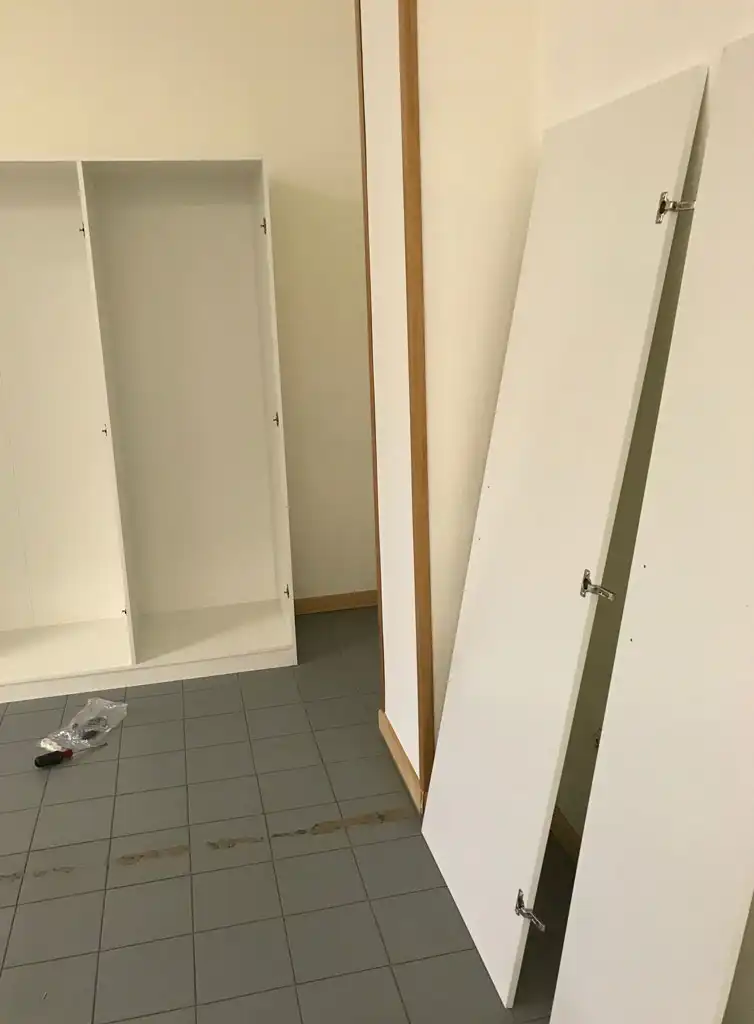
Below you can see some pictures of the project’s implementation: