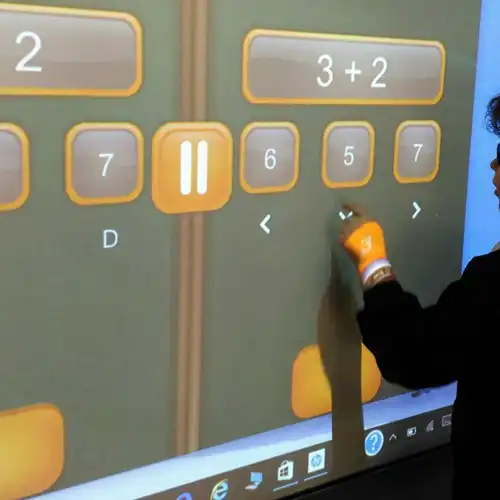
At the Bottacchi primary school in Novara, there is a significant number of pupils with autism spectrum disorder, in addition to the regular population of students with disabilities. These are 6 to 7-year-old children who struggle to stay in class for long periods and need a space where they can rest, sleep, play with tactile materials, listen to music, shout, watch cartoons, cry, laugh, and express themselves freely without desks and chairs. Naturally, the support teachers try as much as possible to organize educational and teaching activities that involve the children and their respective classes to promote integration and inclusion; however, alongside this, specific times, spaces, activities, and tools are necessary.
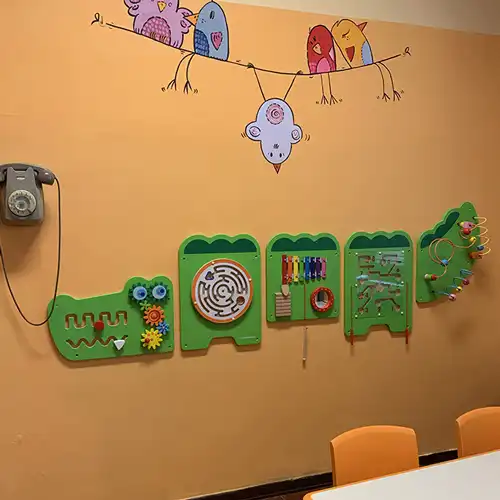
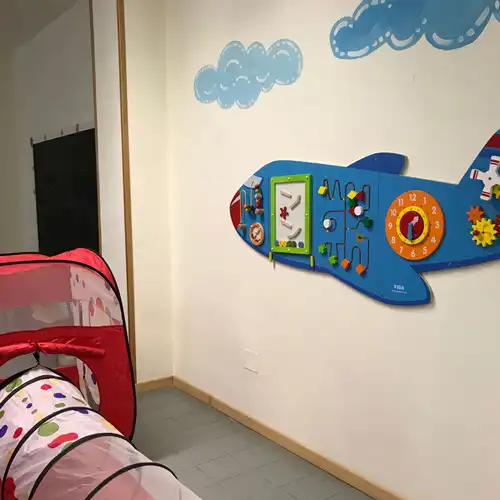
To carry out all these activities, an empty classroom inside the building was identified, which will be used by the support teachers of these children. The idea is to make the space as welcoming as possible and equip it so that the children can express themselves freely without any problems or danger, transforming this classroom into a multifunctional space. Here, hands-on workshop activities can be carried out not only for autistic children and students with disabilities, but when needed for all students in the school, in order to promote easier collaboration and integration through specific workshops.
Once again, we received practical help throughout the setup work, without which the completion time would certainly have been much longer. Therefore, we would like to thank Massimiliano Marazzato and Saverio Giorno for painting the window frames and walls and installing the baseboards, Luca Rigorini from Fortis for applying the vinyl film to the door glass, and the two teachers coordinating the project, Laura Buso and Marina Marzano, for their assistance.
In mid-July 2016, we began work on the project. Below you can see the work in progress:
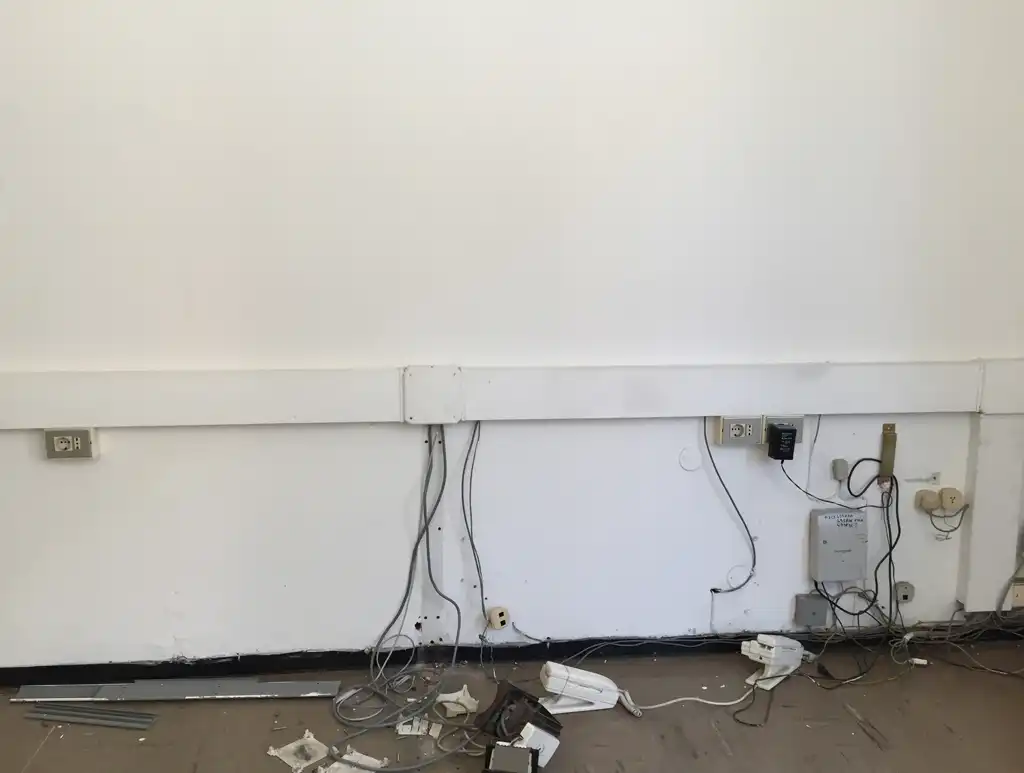
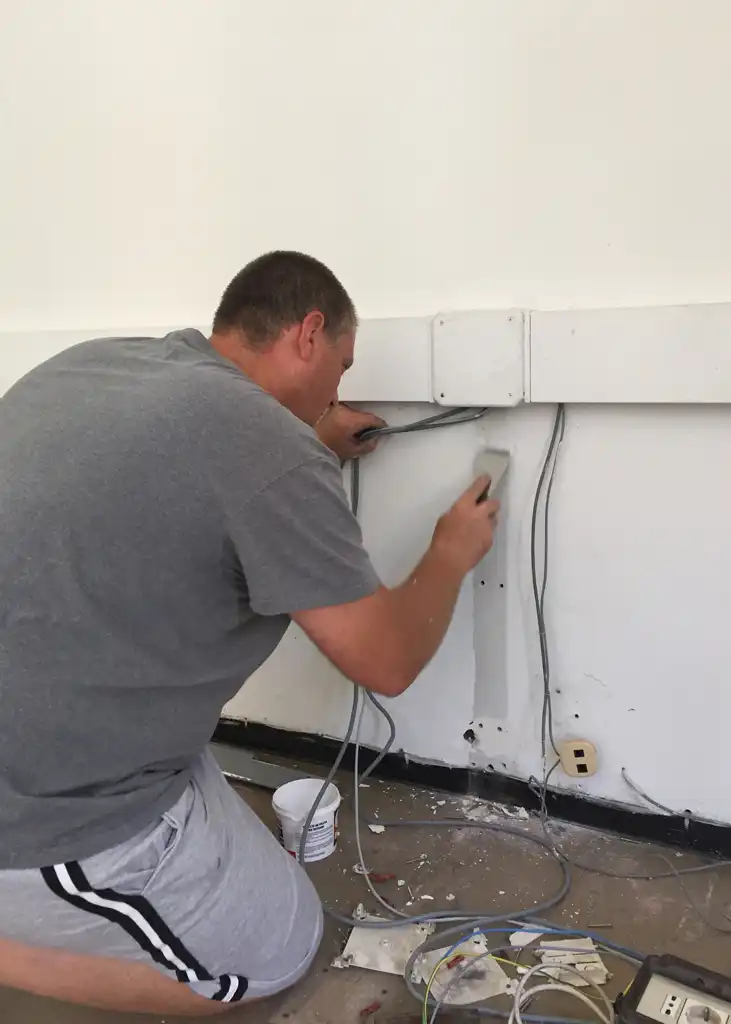
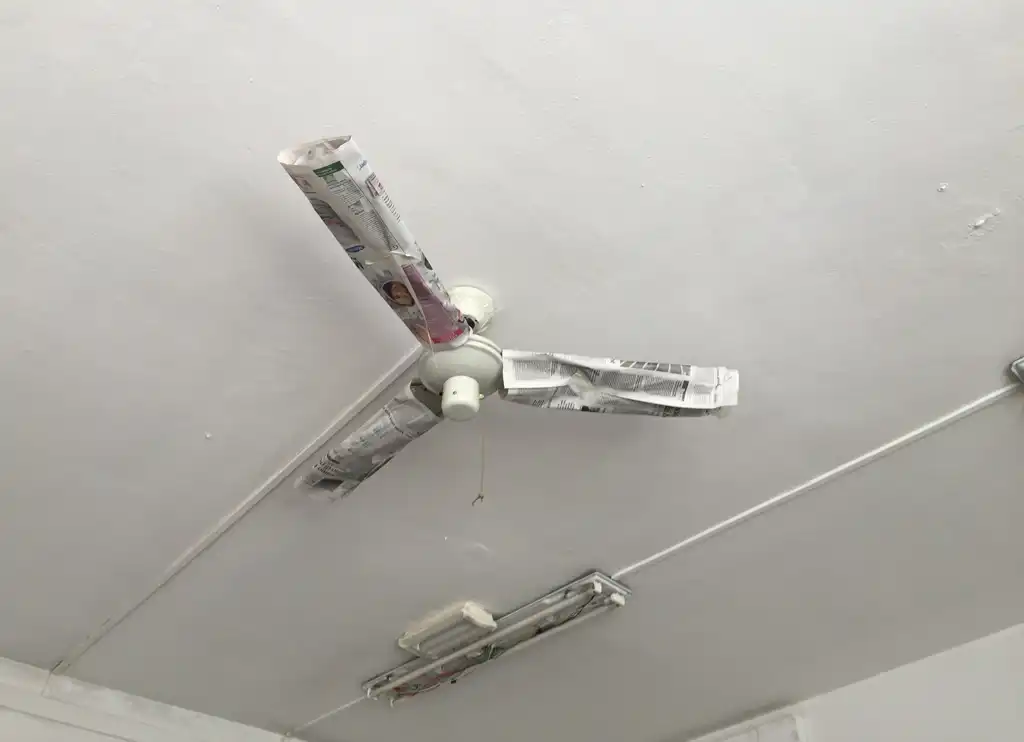
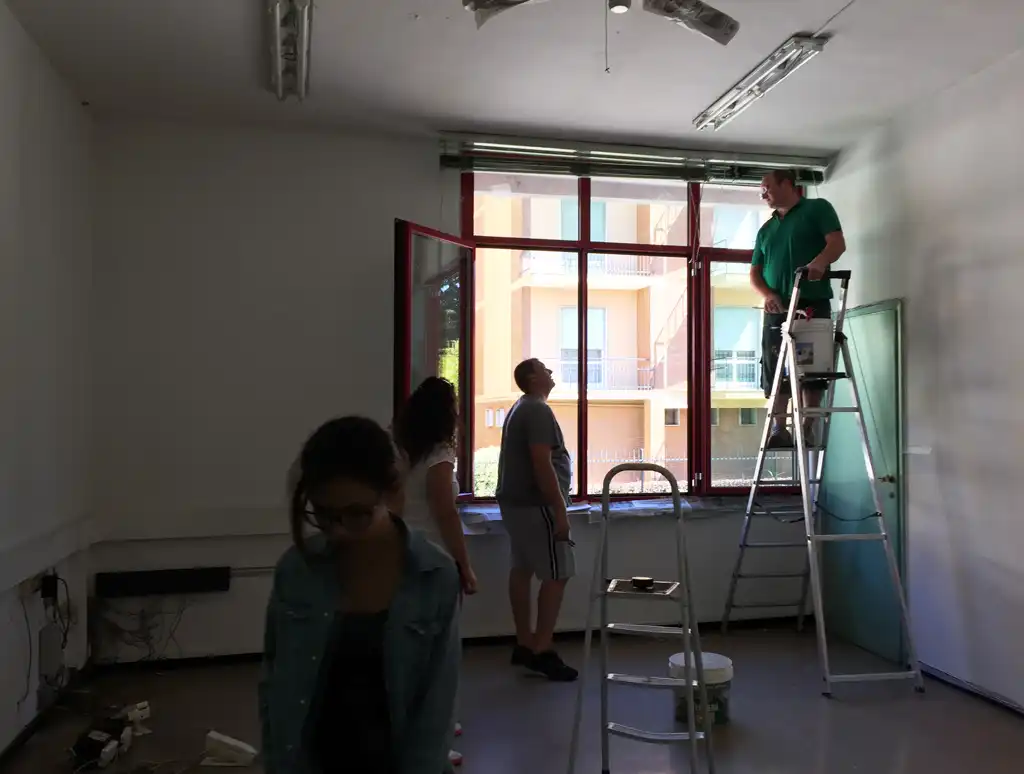
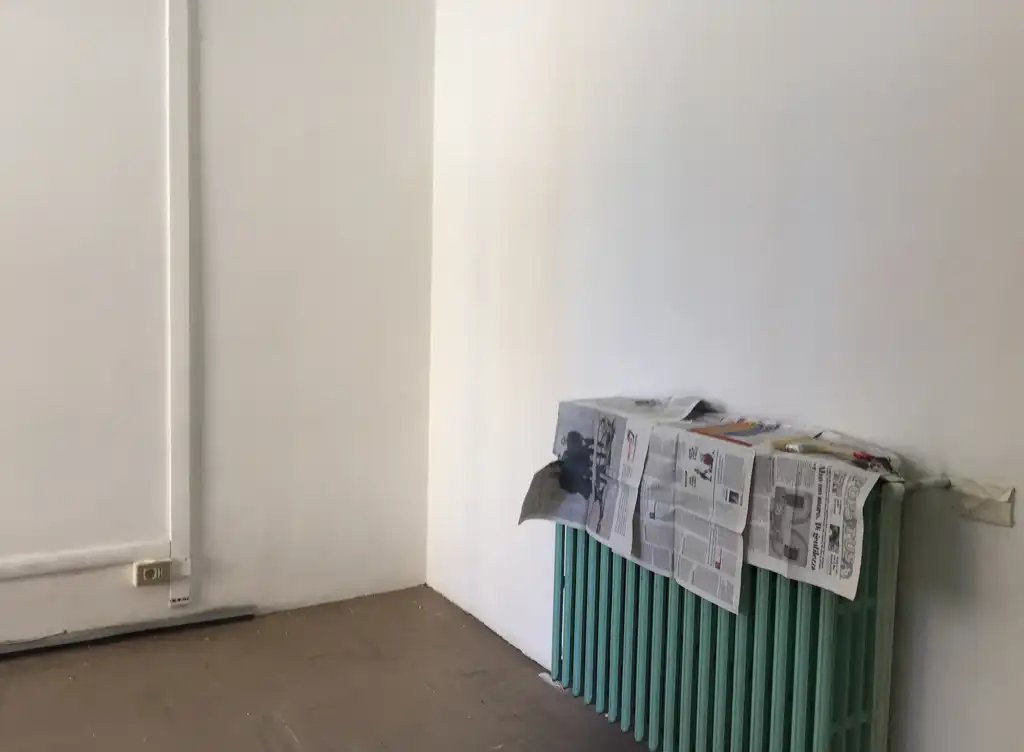
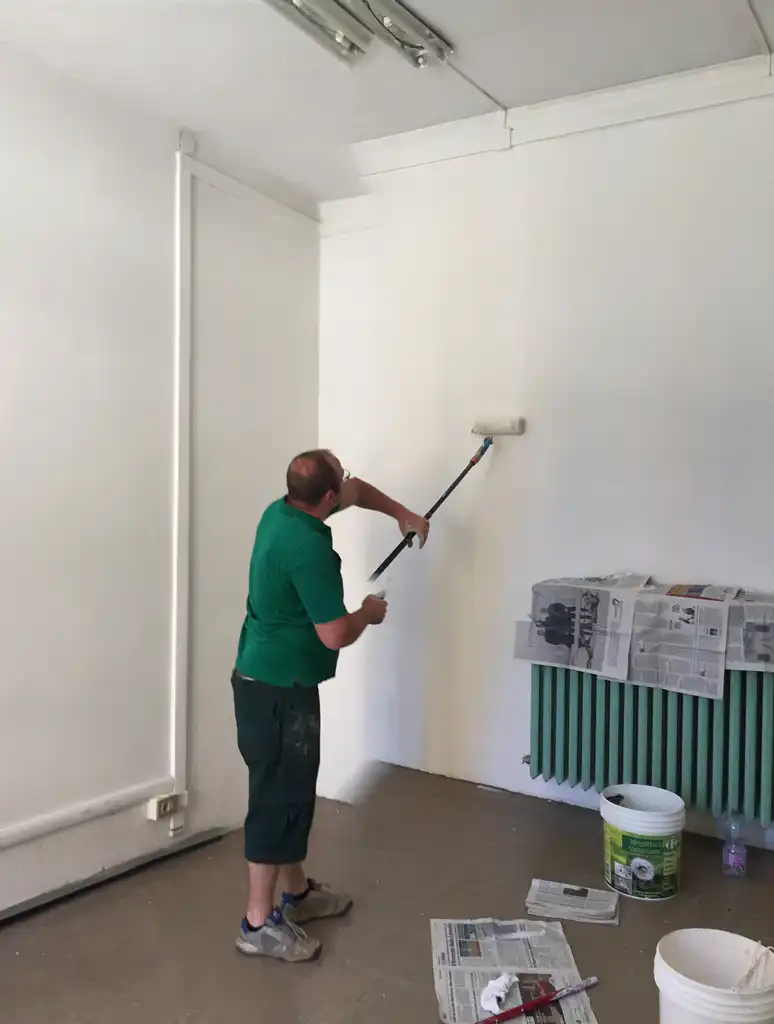
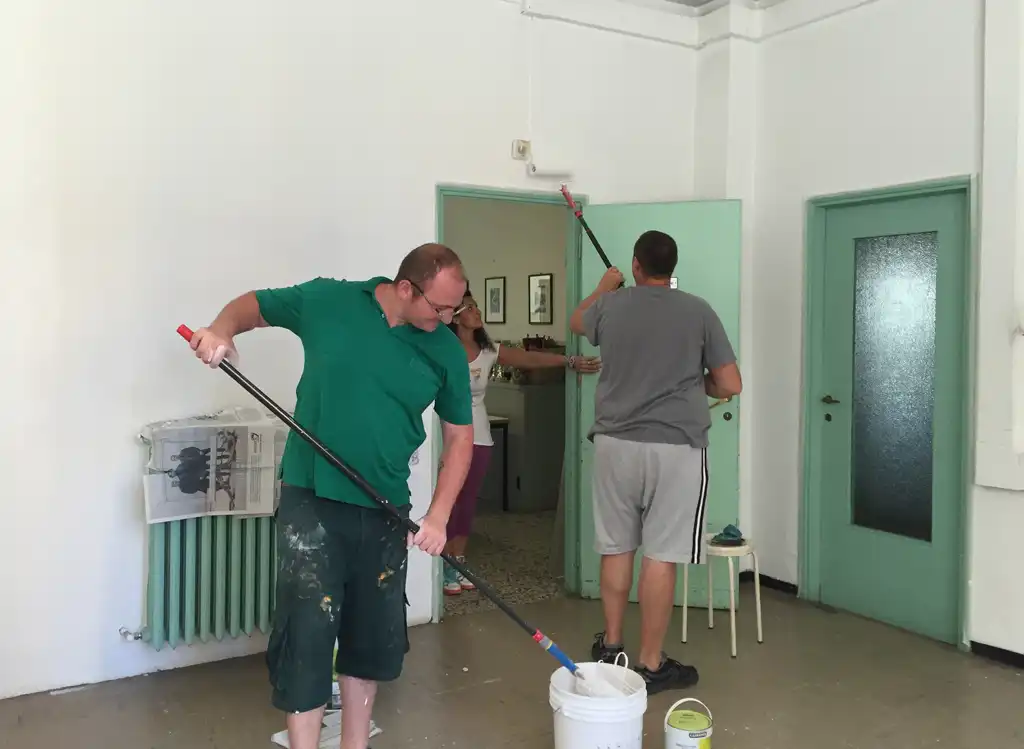
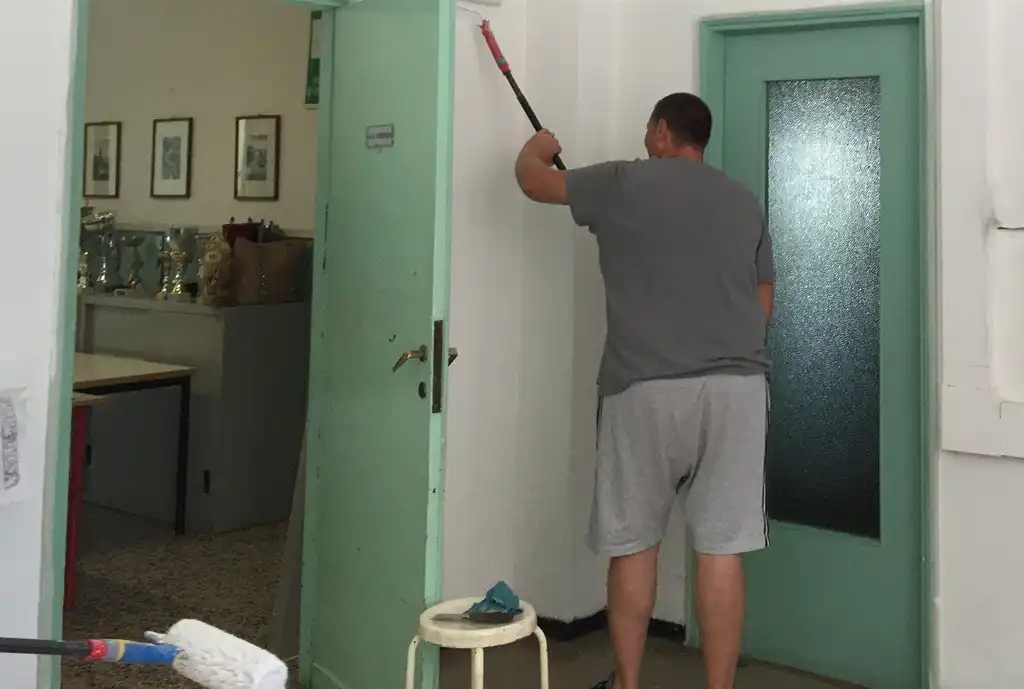
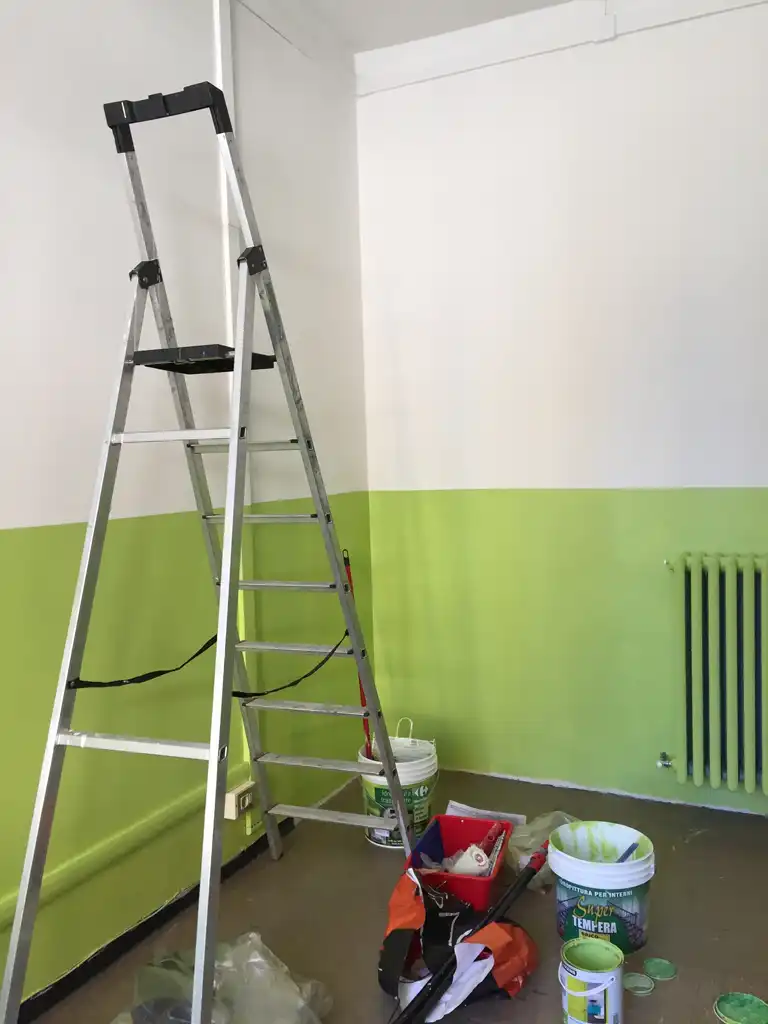
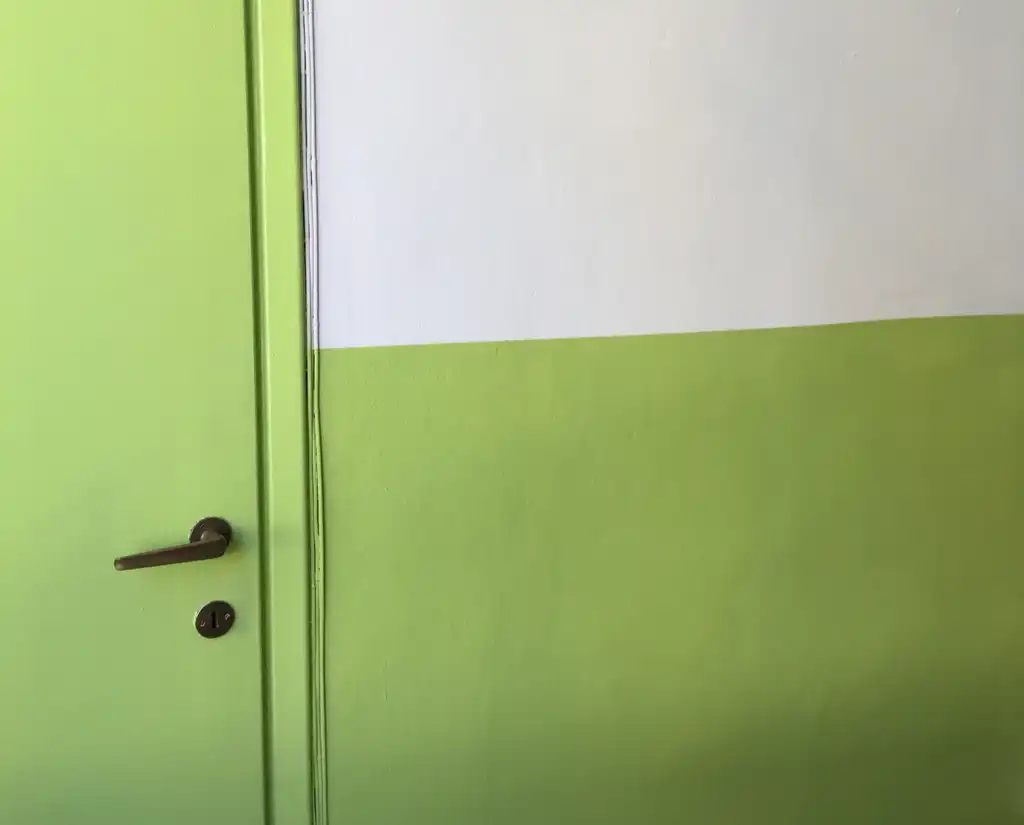
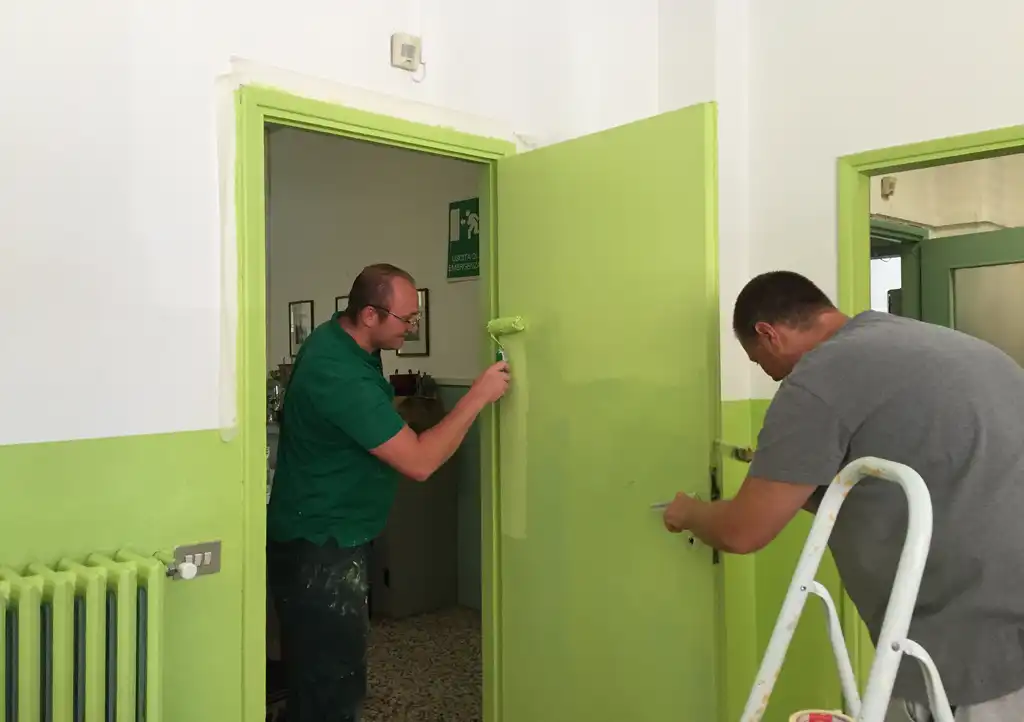
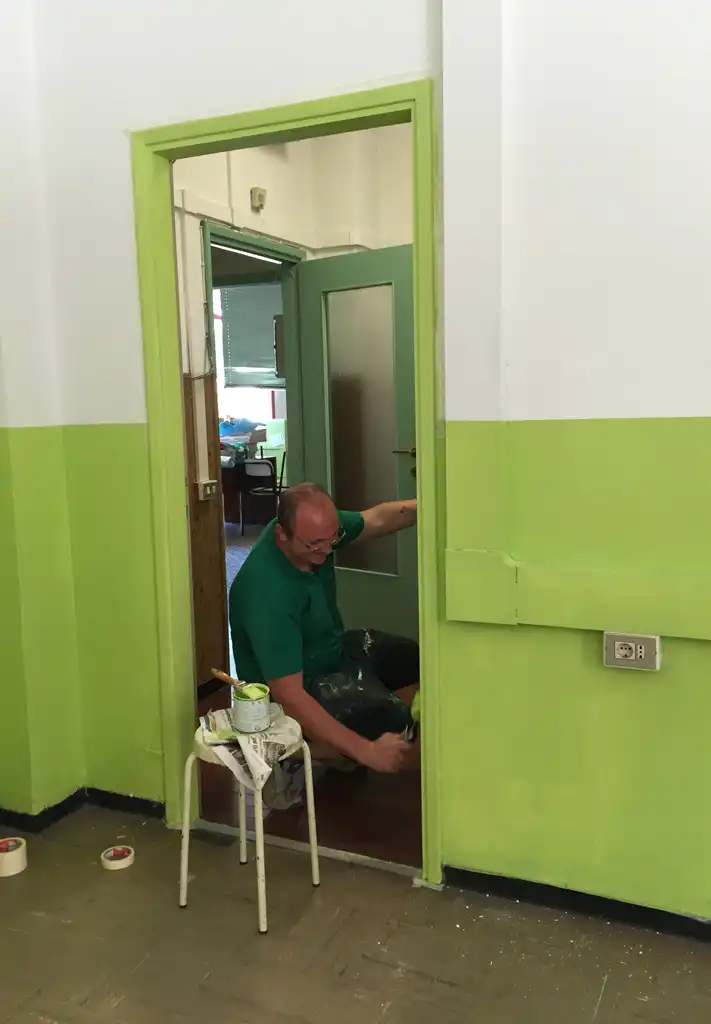
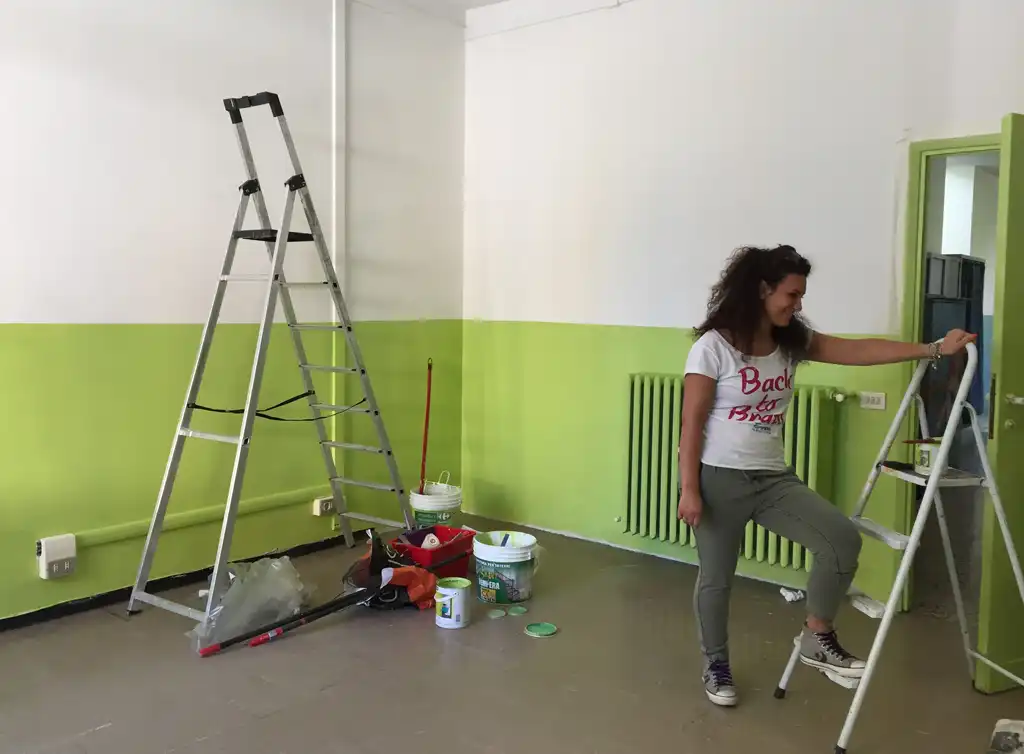
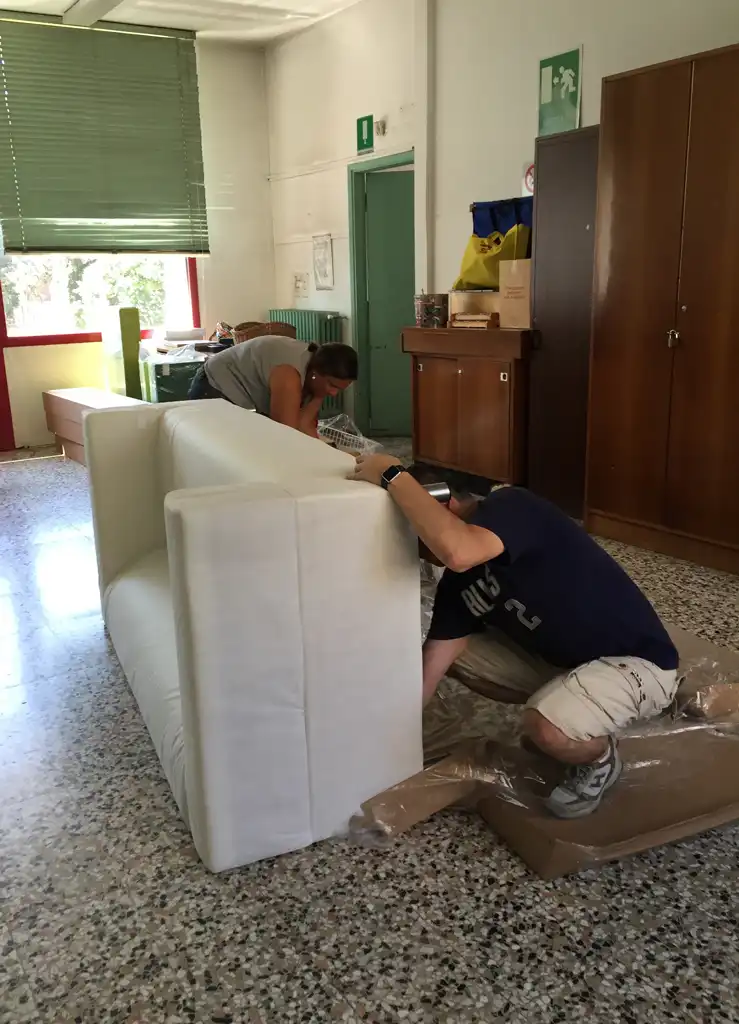
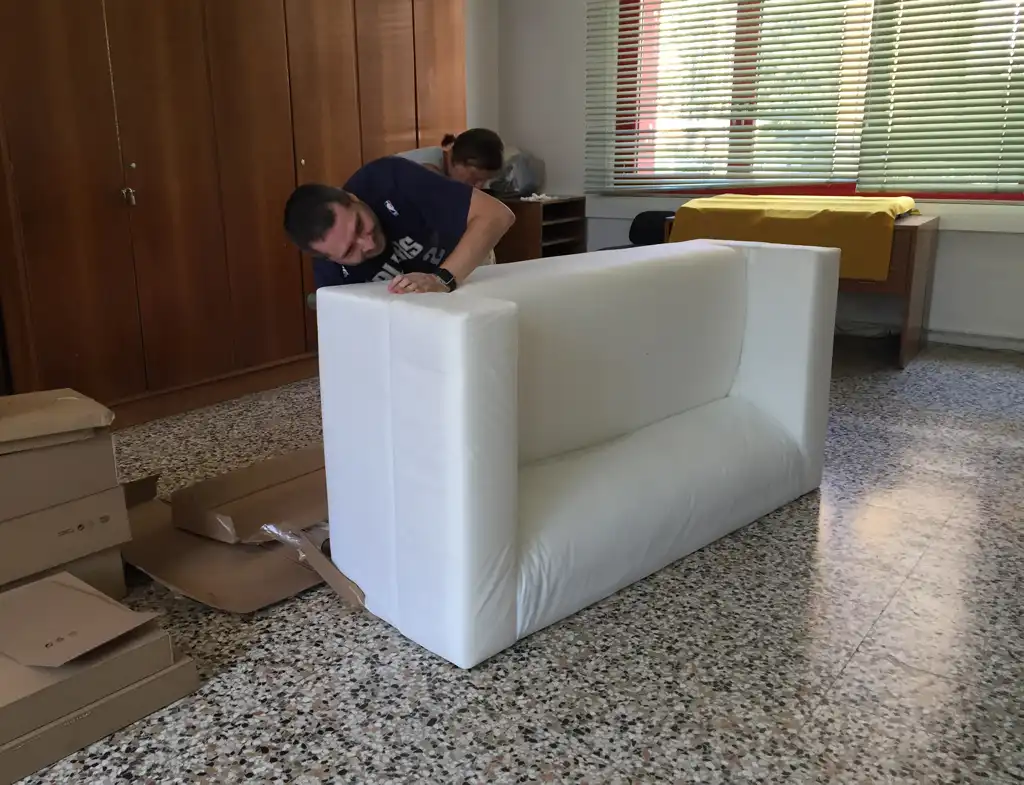
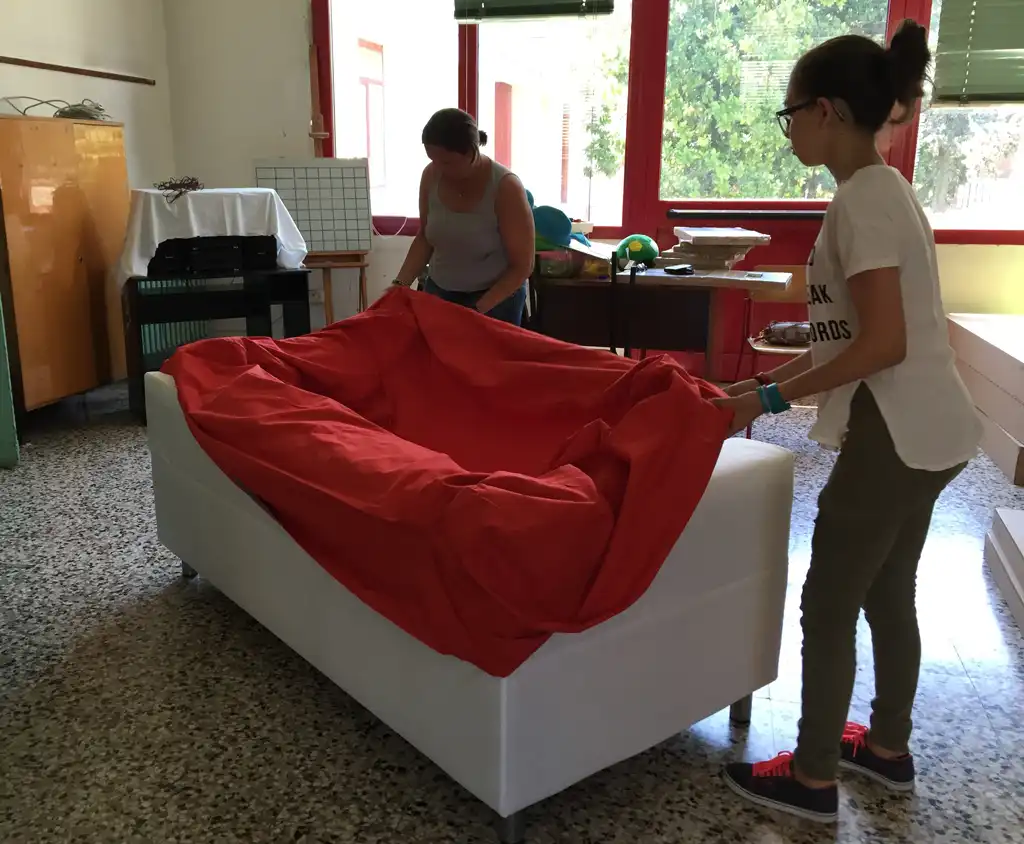
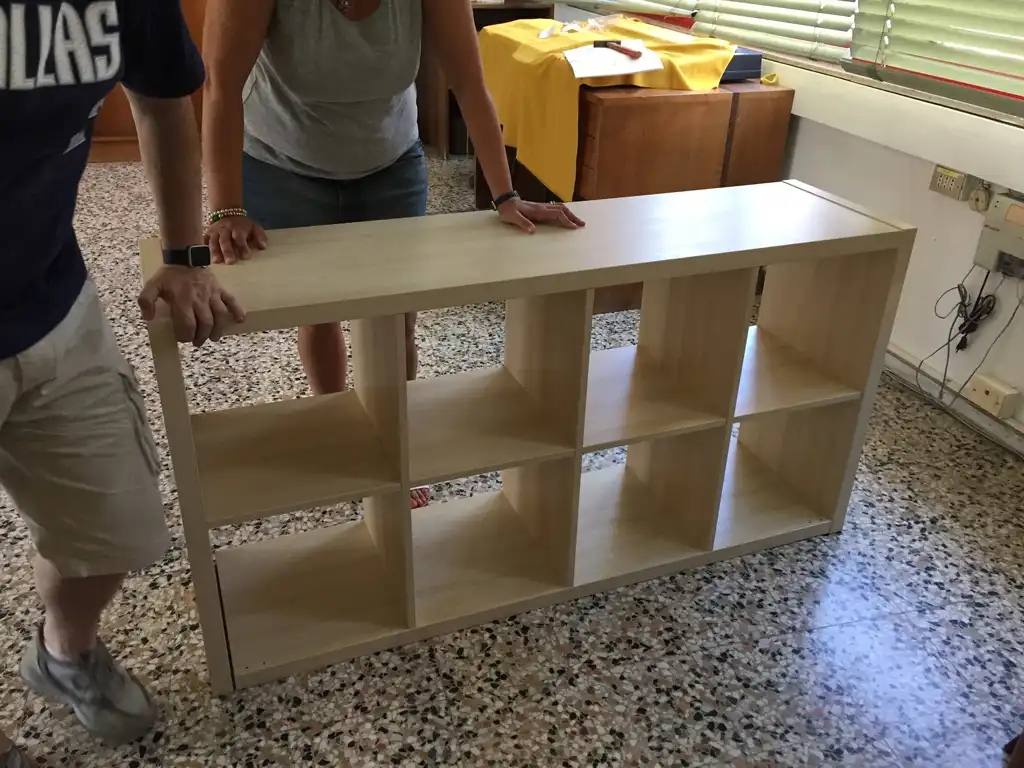
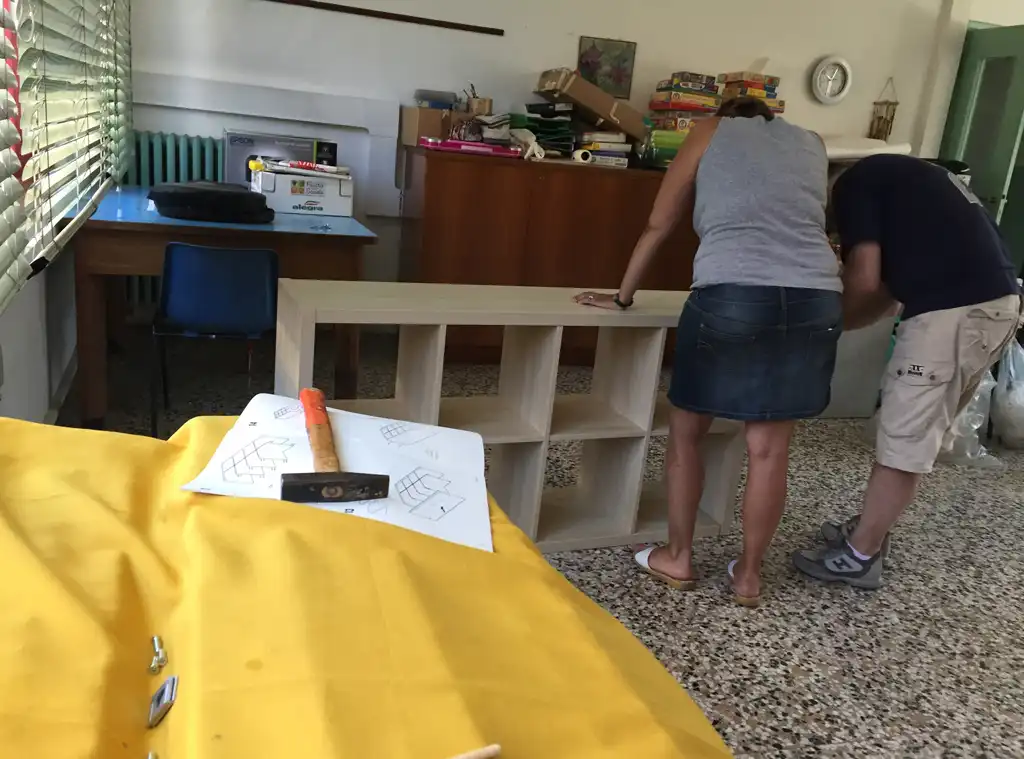
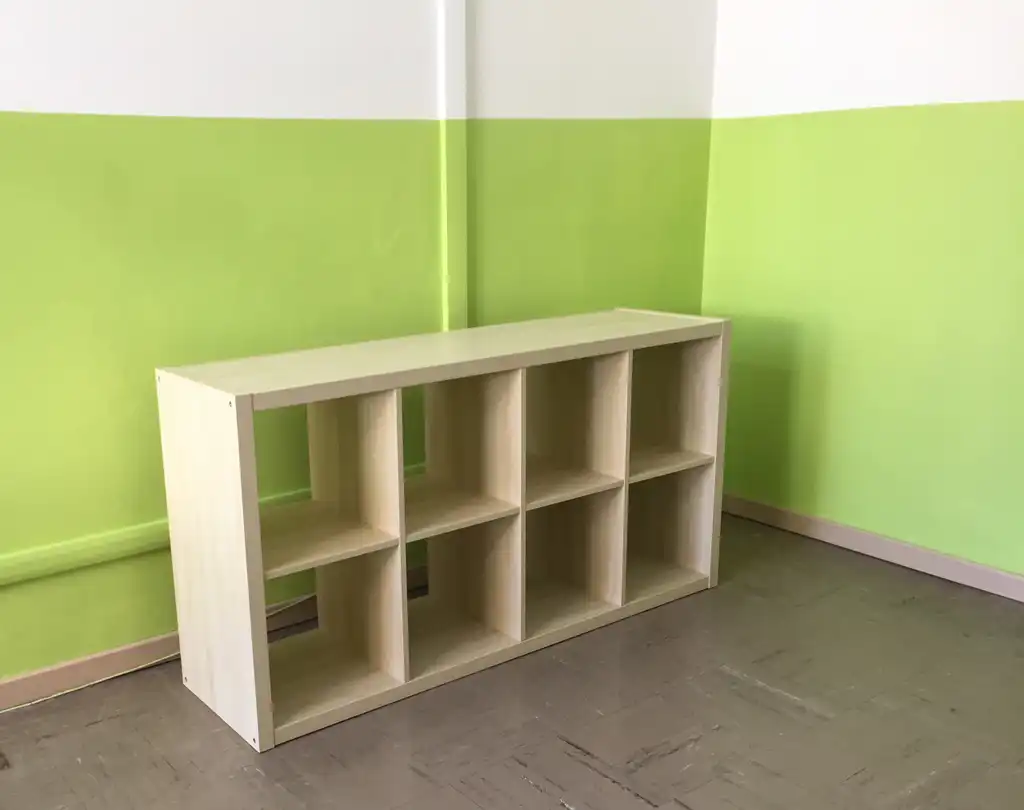
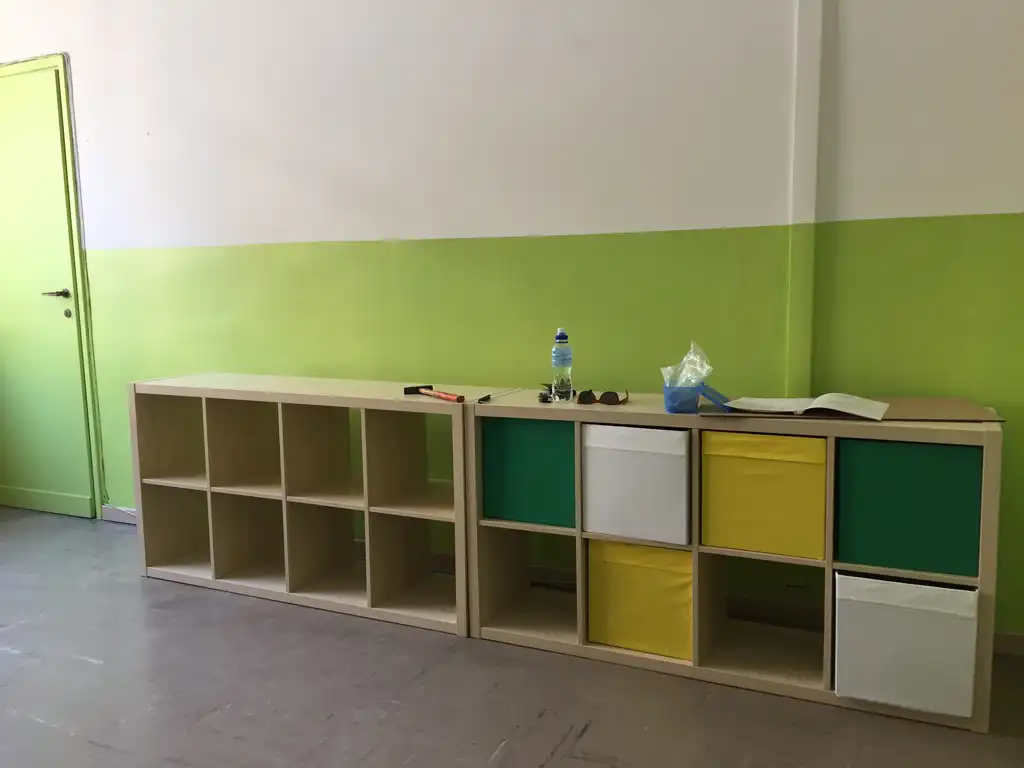
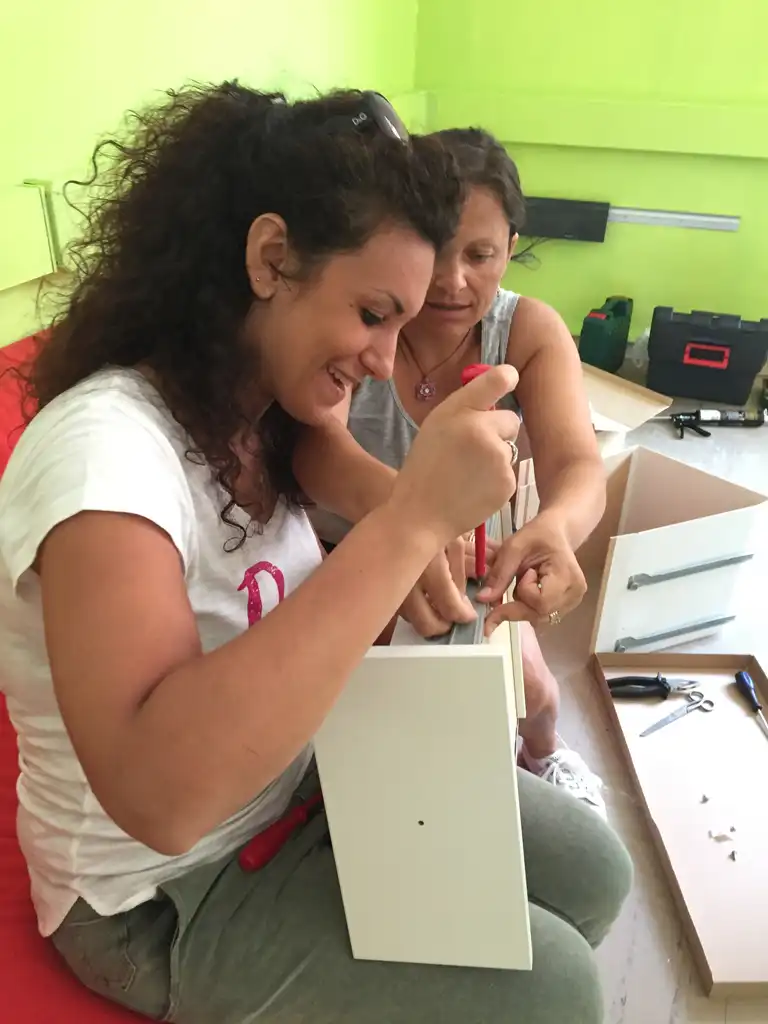
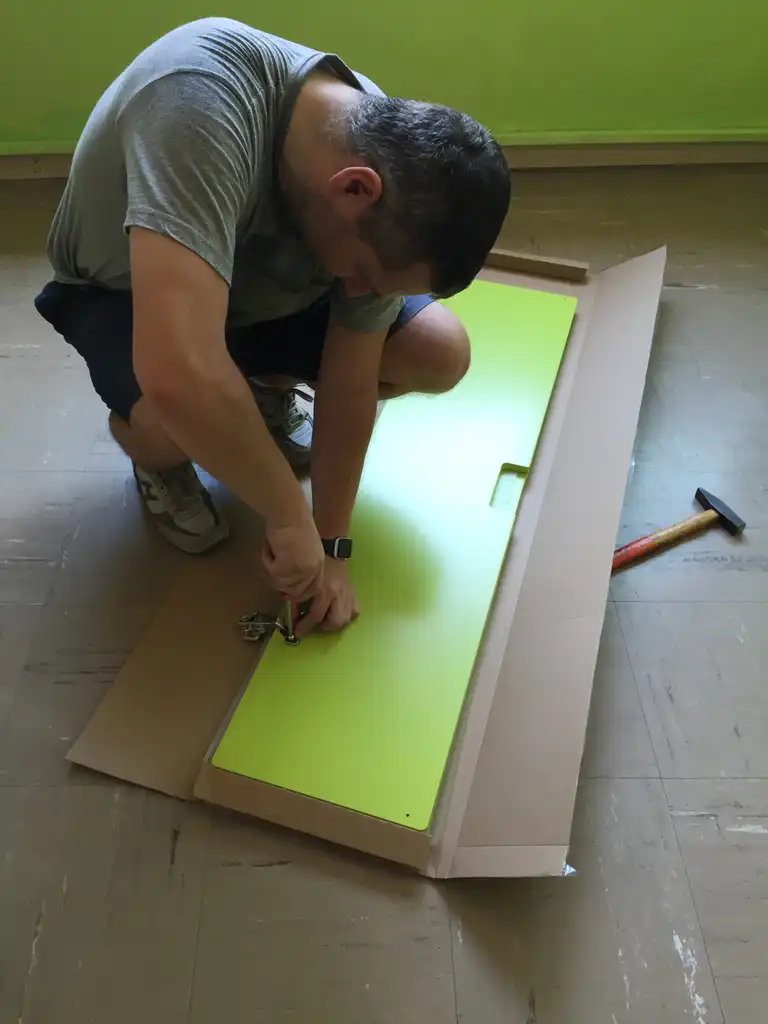
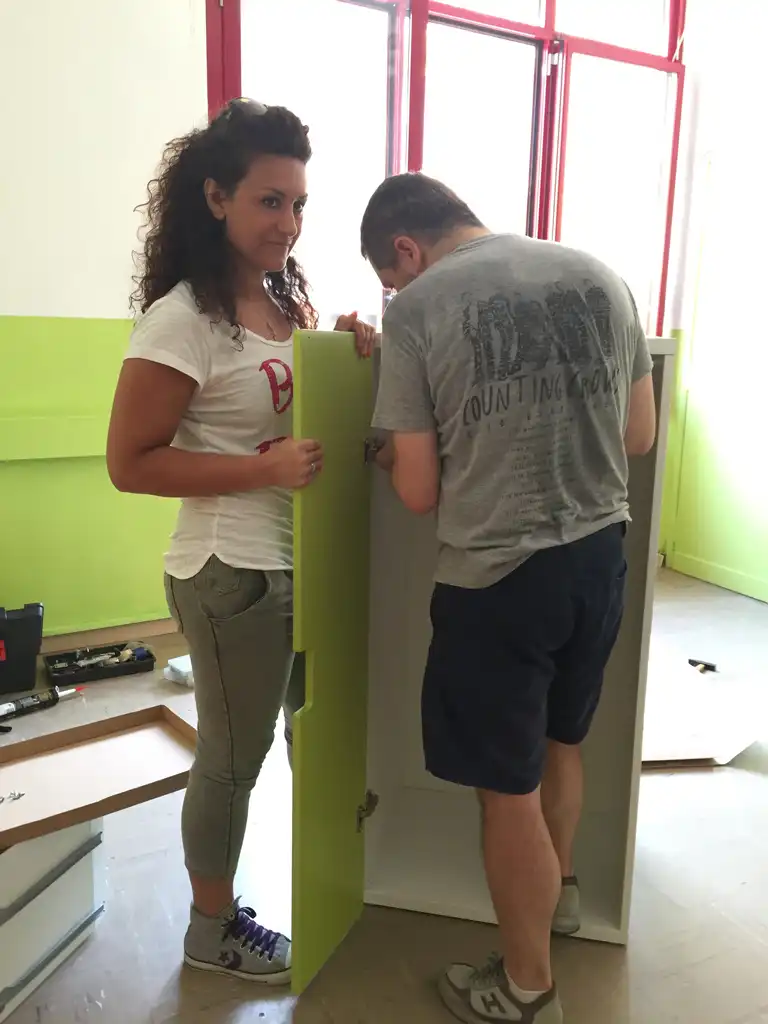
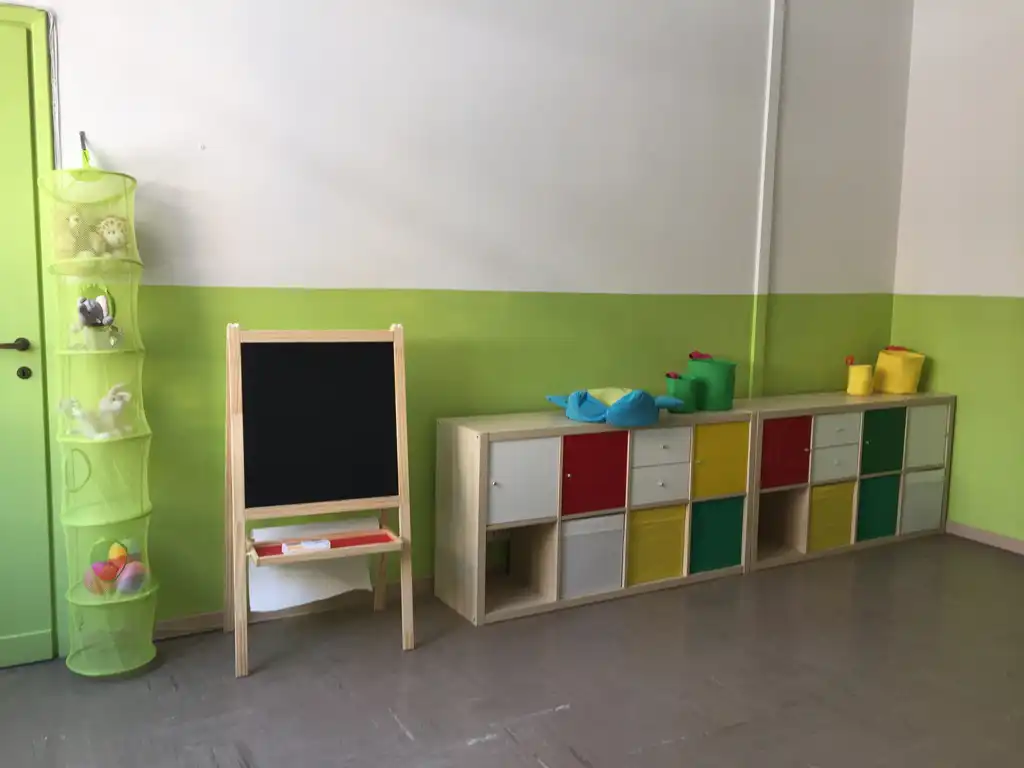
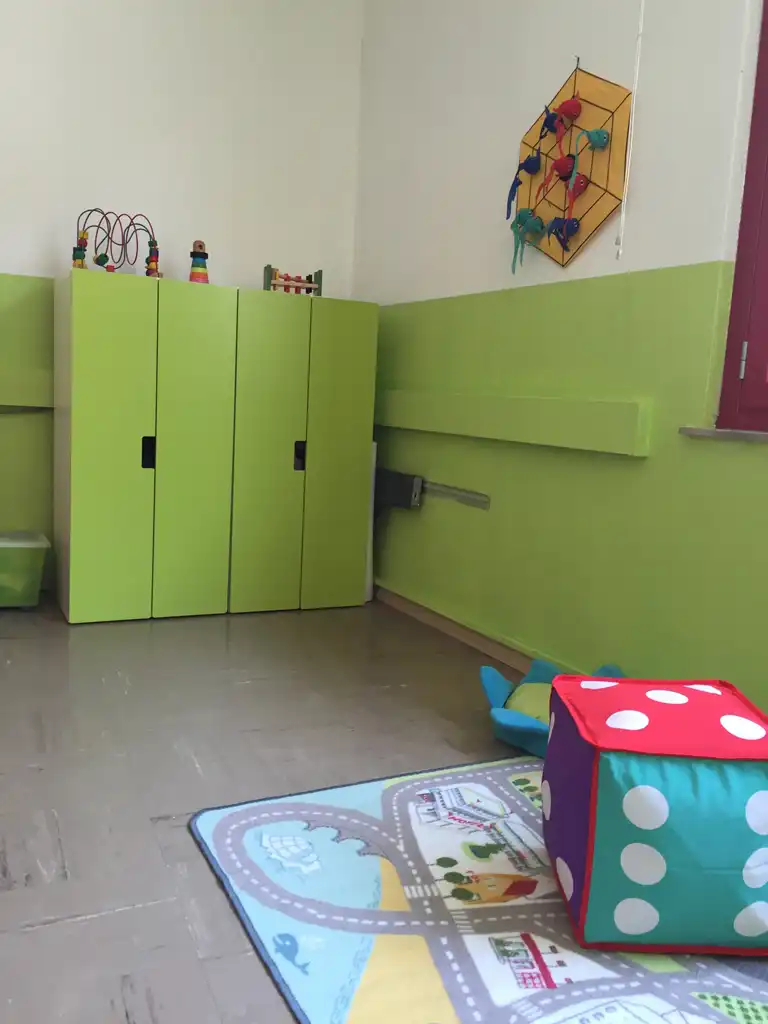
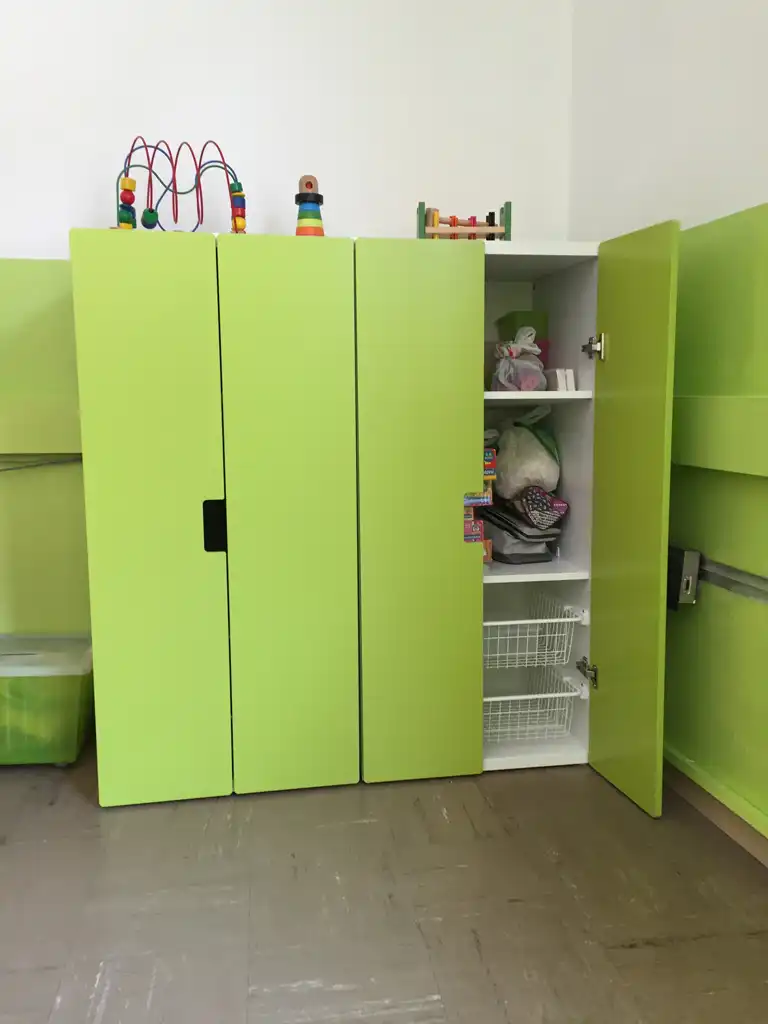
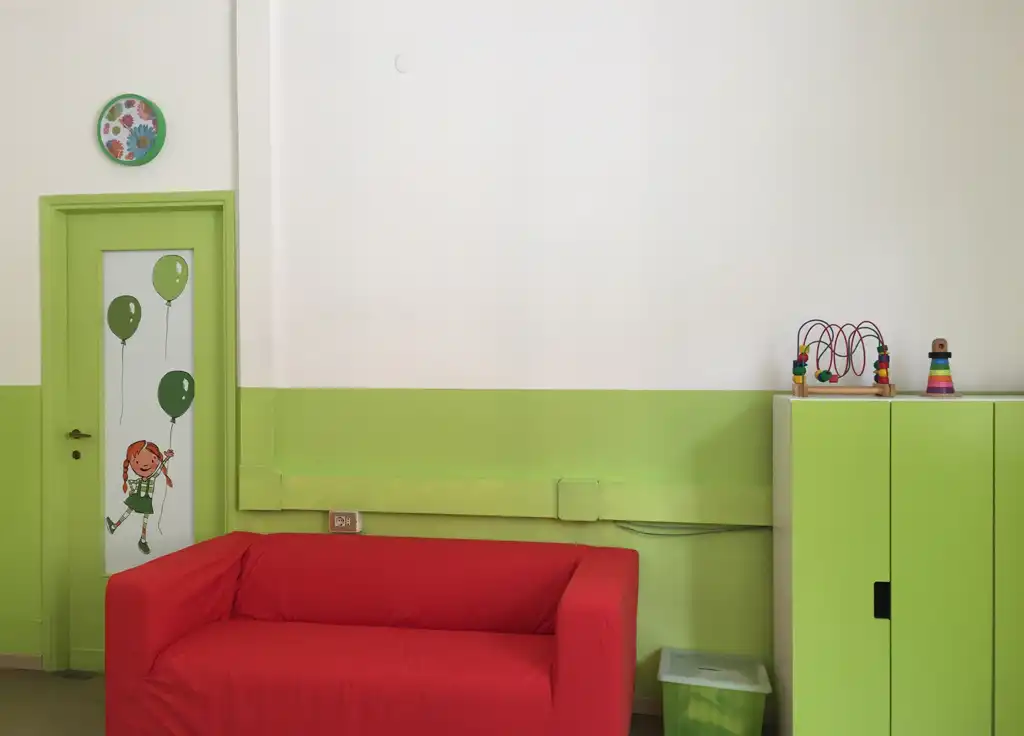
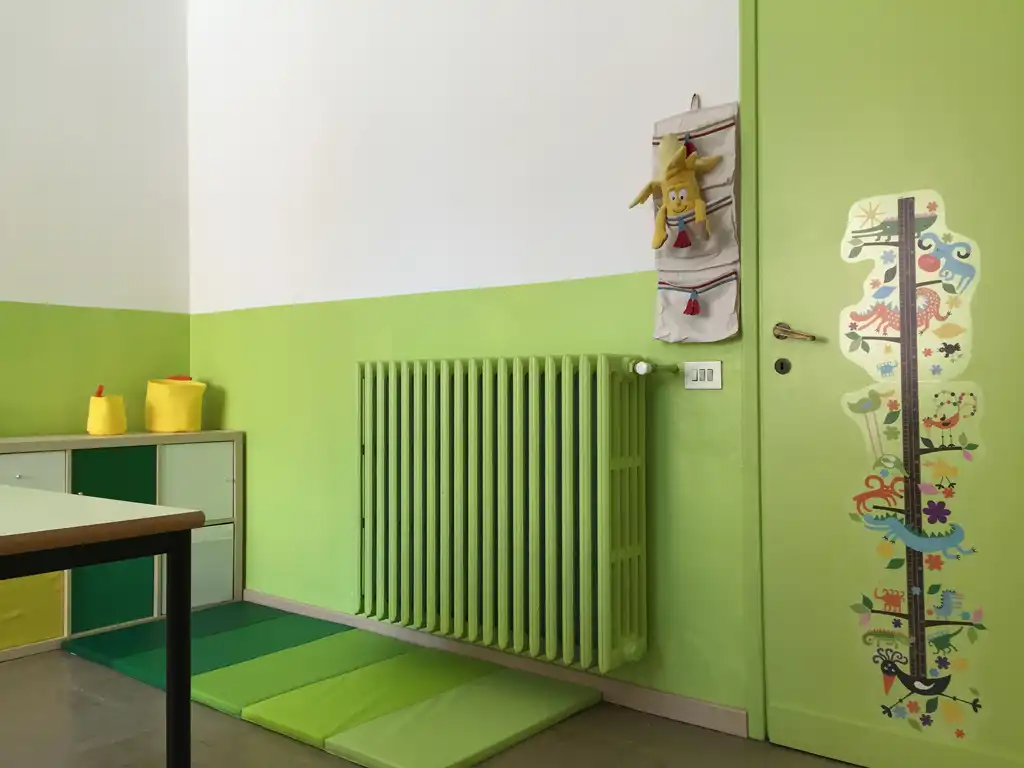
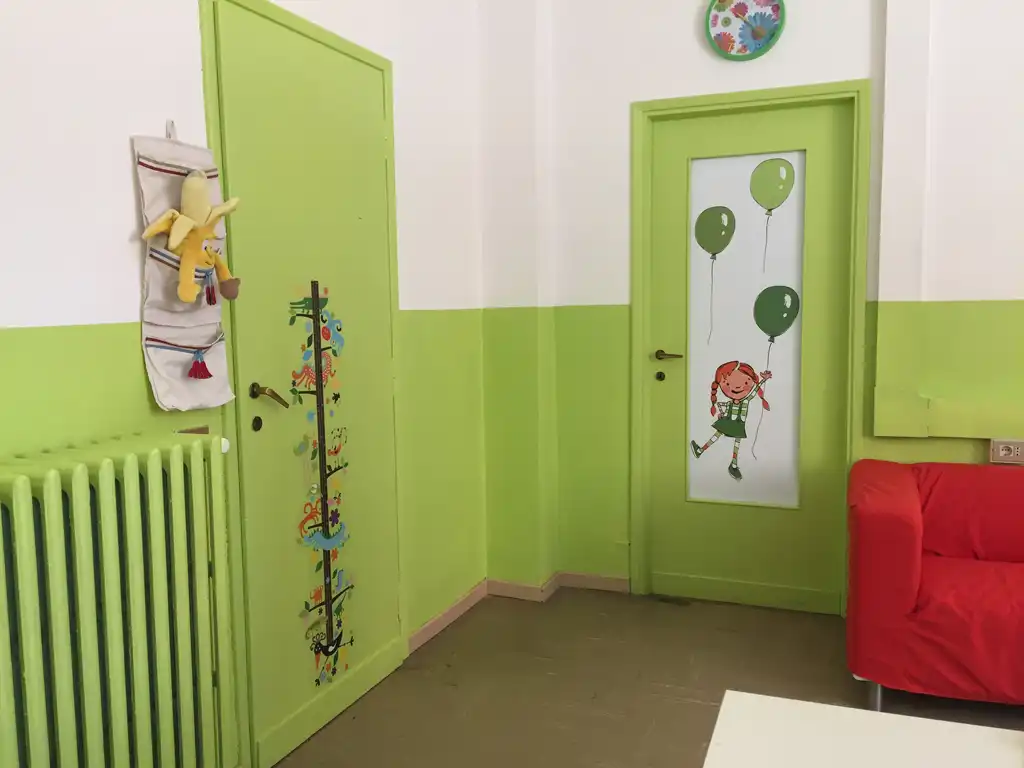
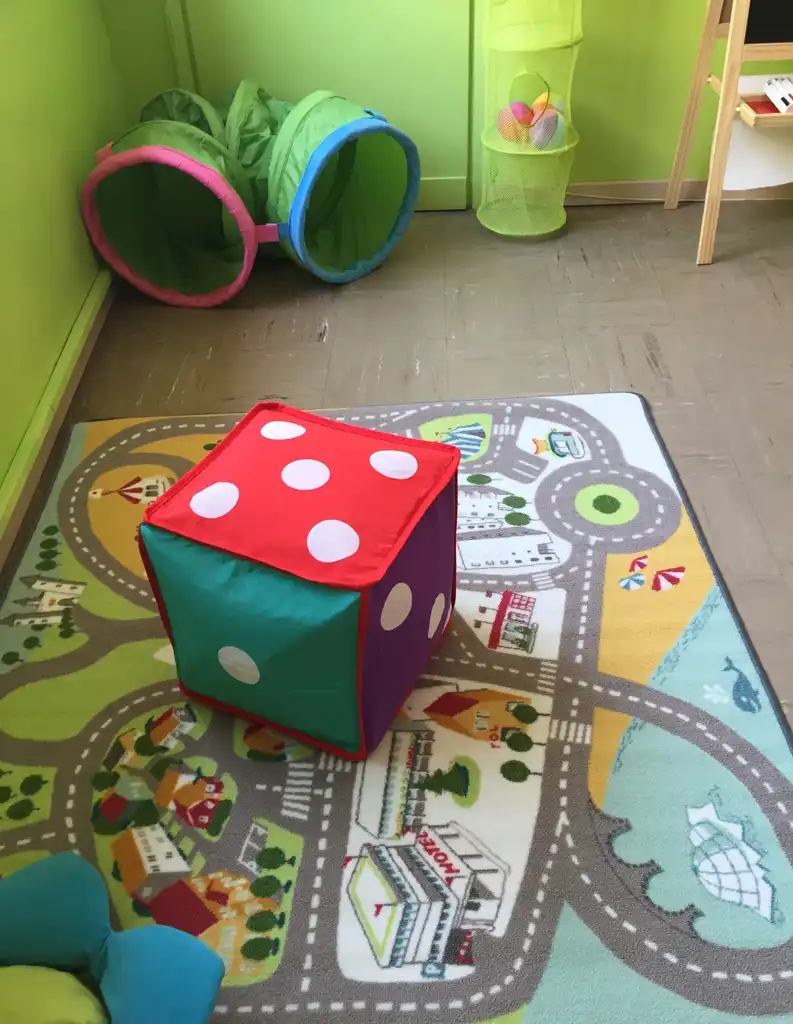
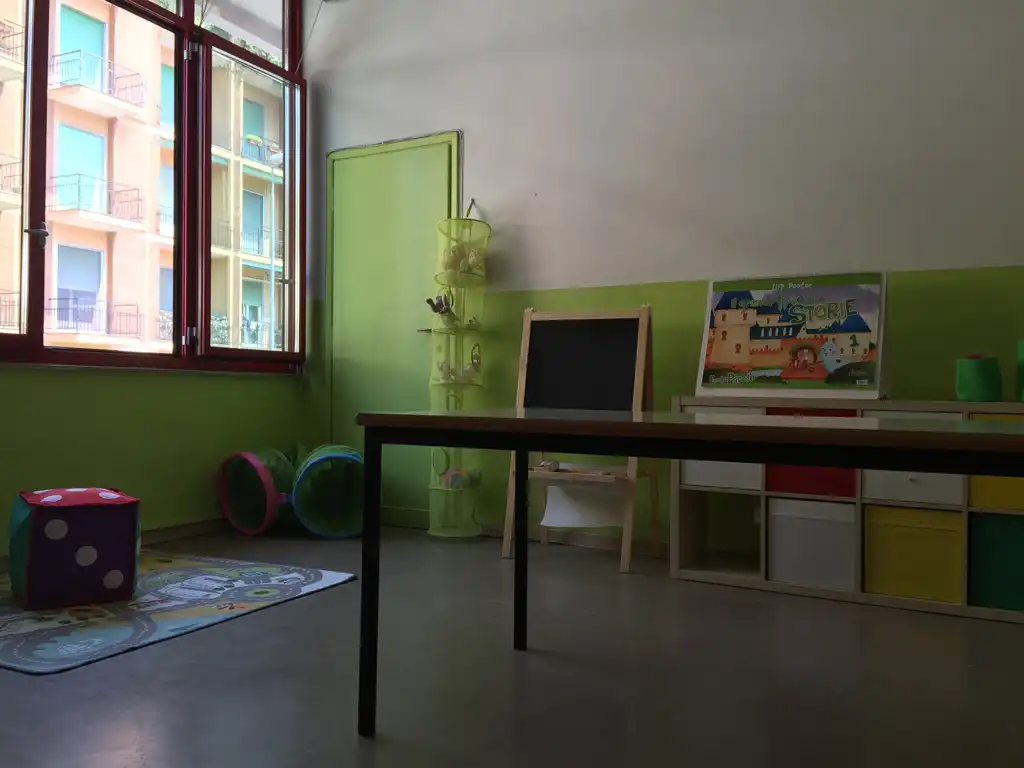
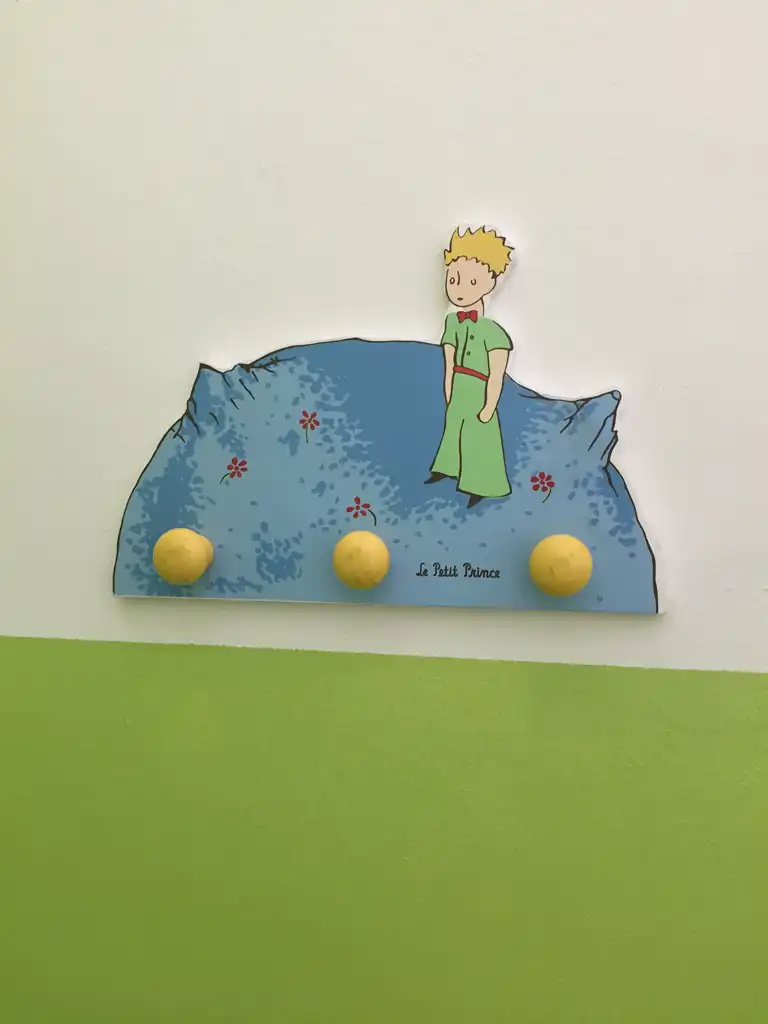
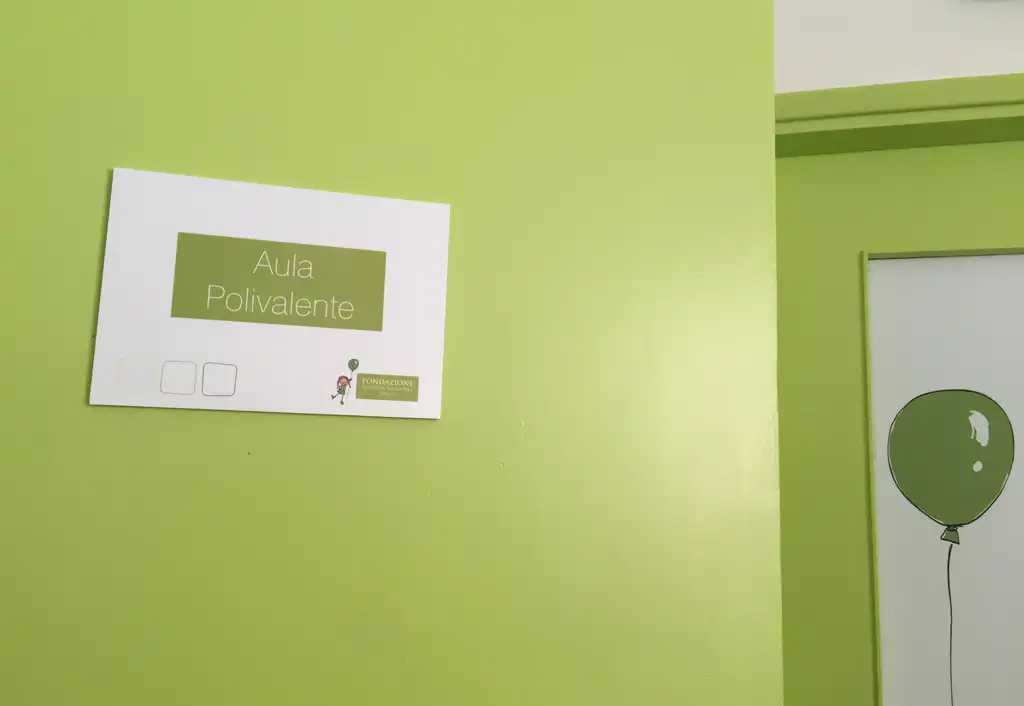
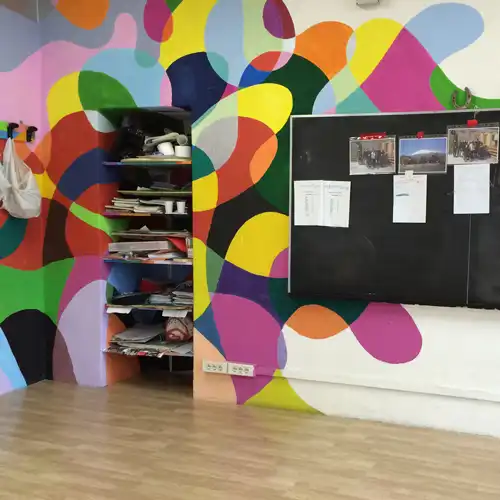
In early September 2016, we finished decorating the walls and subsequently inaugurated the space.
Below you can see some stages of the creation of the murals that will decorate the classroom. As usual, they are the work of Manuela Tripepi.