



STEM learning integrates Science, Technology, Engineering, and Mathematics into a single, interdisciplinary educational model. Moving beyond the traditional fragmentation of individual subjects, this approach connects knowledge through hands-on workshops and practical experiences, encouraging students to solve complex problems and develop critical and analytical thinking. The four pillars of the STEM approach:
Science: Understanding natural and scientific phenomena through direct observation, the experimental method, and hypothesis formulation. Technology: Using digital tools, software, and emerging technologies in a conscious and effective way to explore and create. Engineering: Applying design and prototyping principles to build functional solutions to real-world problems. Mathematics: Analyzing data, calculating variables, and interpreting models to validate and refine ideas.
Key Skills and Benefits for Students Problem Solving: The ability to analyze real-world challenges from multiple perspectives and identify innovative, effective solutions. Teamwork: Development of soft skills related to collaboration, assertive communication, and working toward a shared goal. Creative Thinking: Encouragement to think outside the box in order to develop original ideas and unique prototypes. Future Readiness: Practical and logical skills essential for adapting to the evolution and demands of the modern job market.
The Vision of the Lucrezia Tangorra Foundation
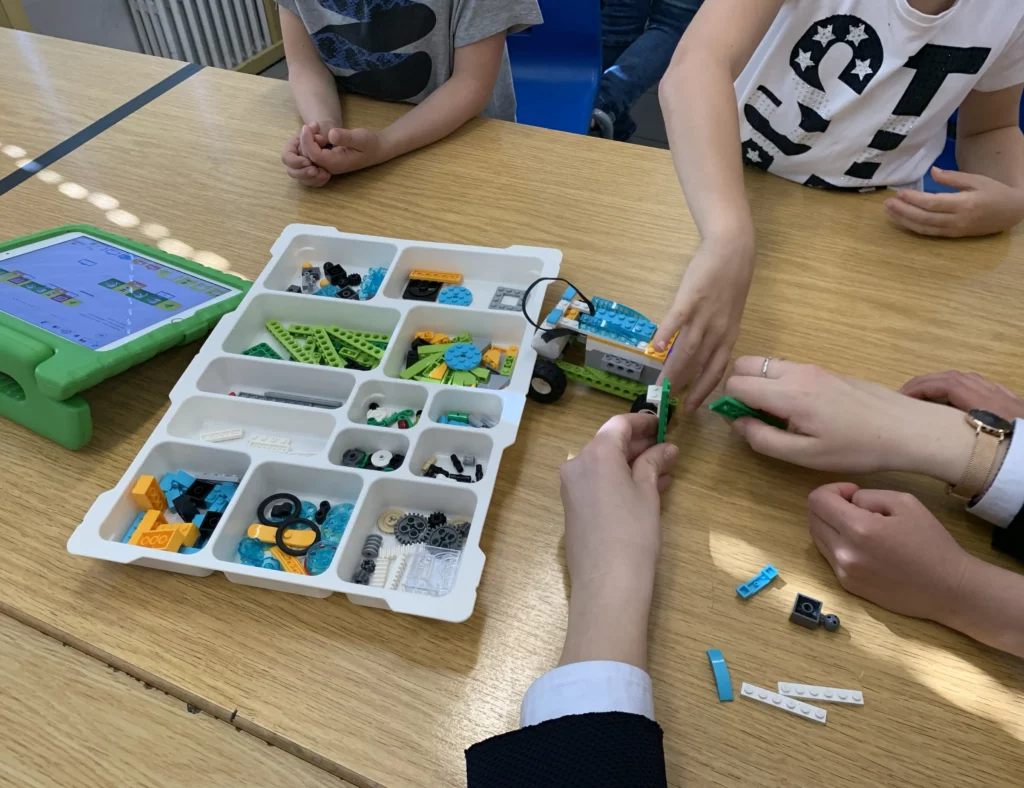
Eleven years ago, when the Lucrezia Tangorra Foundation decided to embark on this advanced educational journey, the educational technology landscape was taking its very first steps. The benchmark product at the time was LEGO Education WeDo 2.0. From the very first workshops, it was clear that despite the significant financial investment, it was an extraordinarily effective resource: it managed to combine the playful dimension of manual construction using LEGO bricks with the logic of problem-solving and programming, proving its educational value. The effectiveness of these workshops was further strengthened by a valuable collaboration with students from the “C. Omar” Technical High School in Novara. Joining the project as tutors, these high school students supported the younger children throughout the program, offering practical help and patiently guiding them through the most complex logical and building steps. This peer-tutoring model not only facilitated the acquisition of technical skills, but also fostered empathy, teamwork, and a shared passion for STEM subjects.
As the culmination of the annual educational program, the Foundation organized a major final event: a competition involving all the schools participating in the project. The contest represented a unique opportunity to test the skills acquired—a celebratory moment dedicated to innovation, constructive dialogue, and healthy team spirit. With the natural evolution of the educational paths and the students’ growth, adopting the LEGO Education SPIKE platform was the ideal next step. Geared toward an older age group and a higher level of learning compared to the entry-level Lego WeDo 2.0 solution, this tool built upon the legacy of the initial workshops to elevate both their complexity and educational impact.
For this new phase of the journey as well, the series of workshops reached its peak in the SPIKE Challenge — a truly engaging and exciting competition designed to put the participants’ newly acquired skills to the test. The event was a central moment of the educational experience, during which student teams enthusiastically faced off, bringing creativity, ingenuity, and a spirit of cooperation to the table to solve specific robotics and programming challenges. Making the competition even more compelling was the presence of rich final prizes for the winning team, along with a custom trophy created with the 3D printer: a tangible recognition not only of the technical results achieved, but of the dedication, perseverance, and teamwork demonstrated throughout the entire program. Far more than a simple contest, the SPIKE Challenge stands out as a true celebration of innovation, rewarding the students’ talent and fostering a healthy, educational sense of rivalry.
Brick and Code
This course stems from the concrete need to go beyond the basic level and explore the architecture of programming with the LEGO® Education SPIKE platform in a structured way. The primary objective is to guide course participants through a targeted journey that focuses on the core principles of computational thinking and computer programming logic, without setting aside the fun.
